



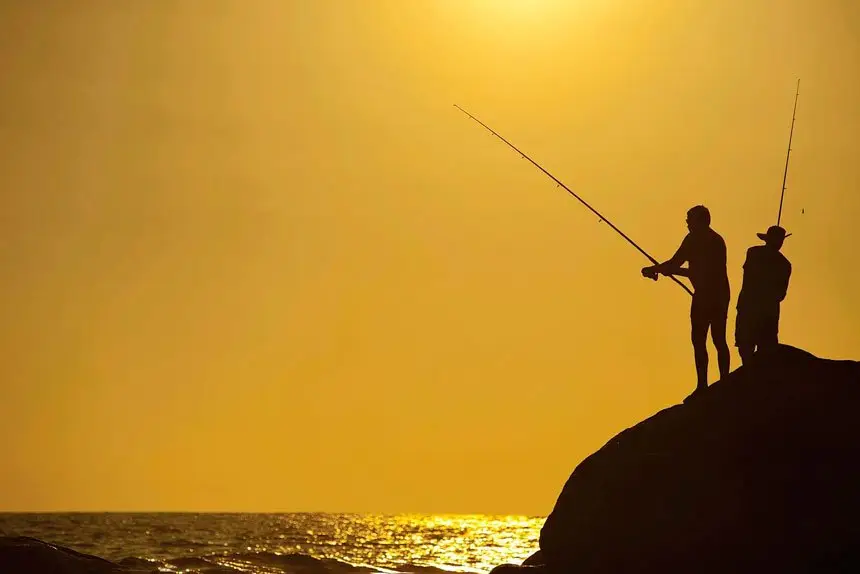
Rock fishing is an exhilarating activity that combines the beauty of nature with the thrill of the catch.
However, it demands respect for the ocean’s power, and an awareness of safety.
Here’s how to select a safe fishing spot, identify risks, and enjoy rock fishing in the Moreton Bay area.
Selecting a Safe Place:
Choosing a safe location for rock fishing involves a combination of research and observation. Firstly, look for established rock fishing spots that are known to be safe. Local fishing forums, guides, and tackle shops can provide valuable insights.

Judging Safety:
To judge if a location is safe, consider the following:
- Tidal Patterns: Check the tides and avoid fishing during high tide or rough sea conditions.
- Weather Forecast: Ensure the weather is calm. Avoid fishing during strong winds, heavy rain, or storms.
- Wave Activity: Spend at least 20 minutes observing wave patterns. Waves come in sets, and a lull might be followed by a large, unexpected wave.
- Escape Routes: Ensure there are clear escape routes in case of sudden changes in sea conditions.
Safe Rock Fishing Spots in Moreton Bay:
While rock fishing is less common directly within Moreton Bay due to its relatively sheltered nature, nearby coastal areas offer great spots.
- Point Lookout on North Stradbroke Island: Known for its relatively safer rock ledges.
Appropriate Fishing Gear:
For rock fishing, robust and reliable gear is essential.
- Rods: Medium to heavy-duty rods (10-12 feet) to cast beyond breaking waves.
- Reels: Strong, saltwater-resistant reels.
- Line: 20-30lb braided line with a fluorocarbon leader.
- Footwear: Non-slip shoes or cleats to maintain grip on wet rocks.
- Safety Gear: Wear a life jacket, and carry a mobile phone in a waterproof pouch.
Identifying Unsafe Areas:
An area may be unsafe if there are
- Frequent large waves: Large, unexpected waves can wash over rocks.
- Slippery or uneven surfaces: These increase the risk of falls.
- Isolated spots: Areas with no easy escape route or access to help.
- Poor visibility: Avoid fishing in foggy or low-light conditions where you can’t see incoming waves clearly.
What to Do if a wave washes you off a rock:
- Stay calm: Panic will reduce your ability to respond effectively.
- Signal for help: Use your mobile phone if possible, or signal to nearby anglers.
- Float and assess: Use your life jacket to stay afloat and look for a safe exit point.
- Swim parallel to the shore: This helps you get out of strong currents before attempting to swim to land.
Rock fishing in Queensland can be a rewarding experience when done with the right precautions and respect for the ocean. Always prioritise safety.