



THE new Australia–United States Critical Minerals Agreement has been hailed as a major opportunity for the Redlands, positioning the region as a potential national hub for critical minerals research and innovation.
Lava Blue, a minerals processing technology company based in the Redlands, is playing a key role in this emerging industry.
The company is focused on bringing a vital advanced material and critical mineral, High Purity Alumina (HPA), into production.
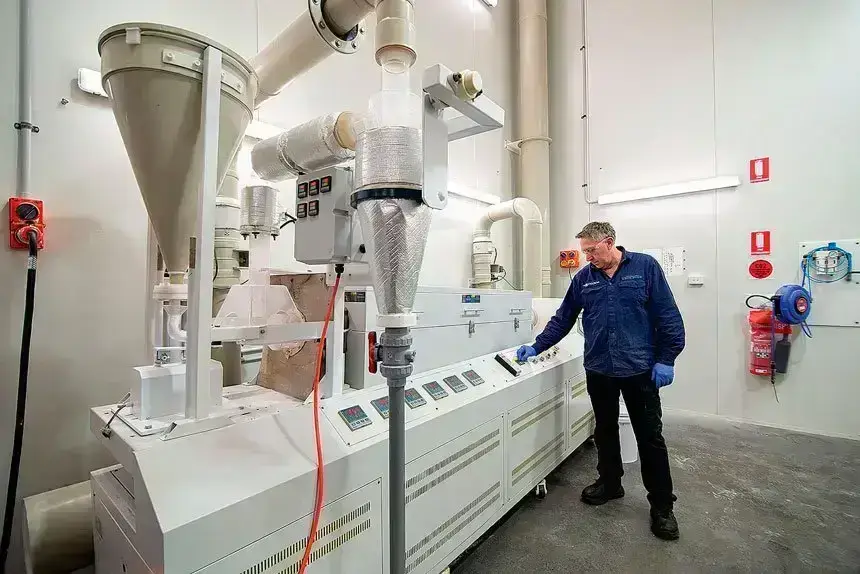
“Lava Blue has developed and is demonstrating a novel hydrochloric acid mineral processing method right here in Redlands,” Managing Director Michael McCann said.

“Our technology can process a range of critical minerals with an initial focus on High Purity Alumina (HPA) because of the vital role it plays in the world’s energy transition.
“HPA is in the phone in your hand and the LED lights above you.”
The Redlands is gaining recognition as a centre for critical minerals research, helping to build Australia’s sovereign supply of vital resources.
Federal Member for Bowman Henry Pike said the agreement provides a significant boost to local projects.
“This deal isn’t just about geopolitics, it’s about what happens right here in our own backyard,” he said.
In 2022, Mr Pike secured $5.24 million in federal funding from the former Coalition Government for the Lava Blue/QUT Predictive Research into Specialty Materials (PRiSM) project at the Redlands Research Station in Cleveland.
“Hidden in the bush behind the Alex Hills Hotel, this world-class facility is turning mine waste into high-purity alumina (HPA),” he said.
“HPA is a critical material found in a whole range of modern uses, including defence radar systems, aircraft sensors and electric vehicle batteries.
“The new Critical Minerals Agreement with the United States creates the stability and investor confidence that projects like this need to expand.”
Mr McCann said the biggest challenge in building a new critical minerals industry in Australia was developing the whole value chain and building a skilled workforce.
“The people required to run a battery materials business are sitting around and waiting for us to call, because we don’t have that industry onshore,” he said.
“That is part of what Lava Blue has been doing in Redlands by working with all levels of government and QUT to put the building blocks in place that can create new industries.”
The Australia–United States agreement introduces price floors and investment safeguards designed to counter China’s manipulation of mineral markets.
It aims to secure investment, ensure fair competition for Australian producers, and strengthen Australia’s position in global supply chains.
“The framework announced is great news for Queensland and Australian companies as it will inject vital capital and secure a pricing structure,” Mr McCann said.
“The challenge will be to target the funding to the right companies that have well-developed proposals that will be economic in the long run so we don’t create enterprises that cannot survive in the absence of government funding.”
Mr Pike said local innovation through projects like Lava Blue shows how the Redlands can help lead Australia’s shift to a secure and sustainable future.
“The work happening here proves that we don’t have to ship raw materials overseas to have an impact,” he said.
“We can add value locally, create jobs locally, and keep our country safe at the same time.
“The Redlands is showing the rest of the nation how it’s done.”
Redland City Council says it supports local economic growth across multiple industries by connecting businesses with key networks and agencies, offering guidance on government processes and grants, and hosting expert-led events.