



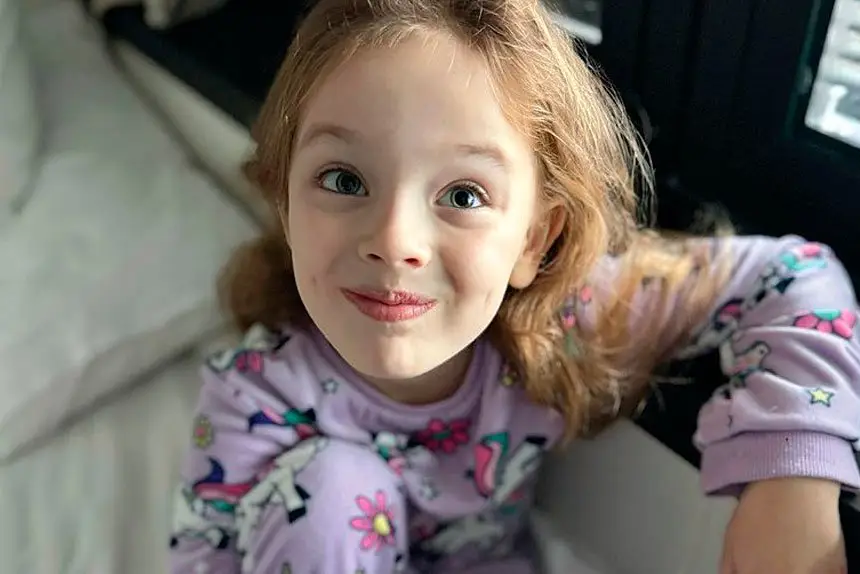
A Redlands family is calling for more awareness of bone marrow testing and donations as their daughter is left waiting on international lists for a match.
Addison Kemp, 5, was diagnosed with Aplastic Anaemia in March 2024 after a few bruises raised concerns with her parents and she was taken to the doctors before being admitted into the Childrens Hospital Queensland.
Aplastic Anaemia, also termed as bone marrow aplasia, is a rare condition in which the body stops producing enough new blood cells and can be a result of bone marrow damage.
Mother, Bianca Kemp said the diagnosis came as a surprise to their family, but she was thankful for all the support shown by medical professionals and the community as their family adjusted to a new normal.

“Originally we thought she was just clumsy,” she said.
“It all happened on the 22nd of March, and just before then we noticed that it looked like her arm had been twisted, like someone had grabbed her elbow.
“We took her to the doctors to check there were no deficiencies and get a blood test and we later got a phone call to take her to the Children’s Hospital for a possible acute leukemia.”
Addison’s condition was later confirmed as Aplastic Anaemia and she would need to have more tests and platelet donations.
“The scary thing is if I had left it and not taken her that week, she could have fallen over and cut herself and bled out because she didn’t have platelets, or she could have caught something and got sick,” Ms Kemp said.
Addison’s condition limits her contact with strangers, to avoid catching any flu/cold symptoms, but has had unwavering support from her parents and sister, Crimson over the last several weeks.
Ms Kemp said she had two of the strongest children in the world and was very thankful to have the support of her friends and neighbours in donated meals and kind words and encouragement online.
A matching bone marrow donor is usually found in full siblings, however the Kemp family learned that Crimson was not a match for her sister, so a different donor would be needed.
Ms Kemp said the family is looking towards the international donor list for a match for Addison, and encouraged more Australians to get tested so they could make all the difference to someone if needed.
“It’s not just one person who benefits from a donation, it’s their whole family… there was a newborn here at the hospital a few rooms down from Addison’s room who was going in for a transplant,” she said.
“We found that so many Redlanders are so supportive of our family, it really does take a village to raise a child.”
A standard testing kit involves a cheek swab which is then tested so that if there is a matching patient, steps can be made to organise for the transplant.