



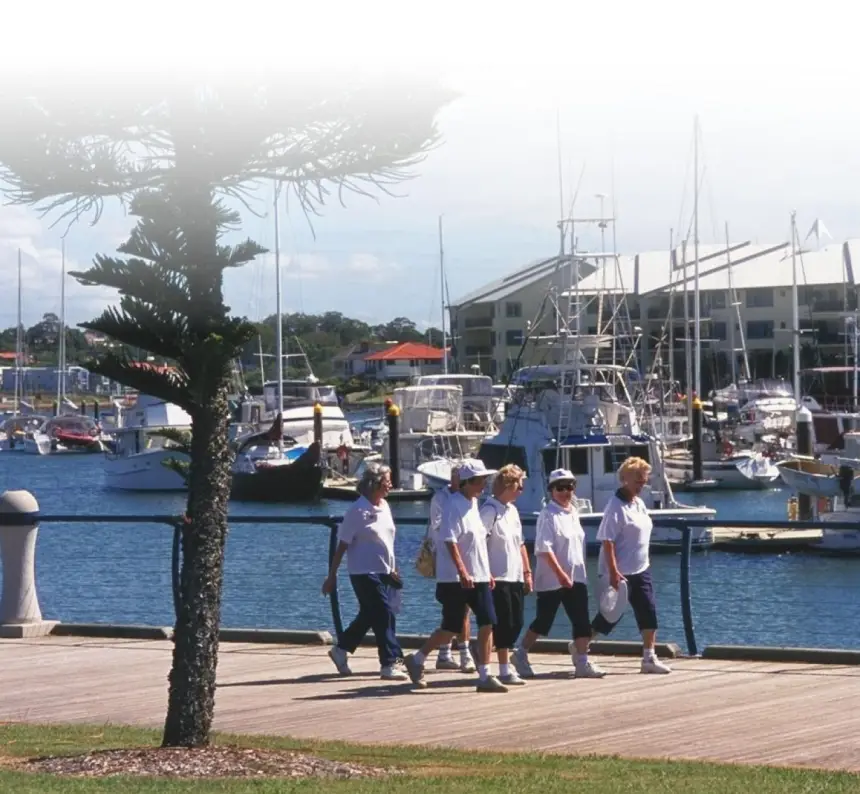
REDLAND City Council is set to consider a sweeping new 20-year active transport strategy aimed at getting more residents out of their cars and onto footpaths, bikeways and shared paths with the city targeting a doubling of walking and riding trips by 2046.
The Redlands Coast Active Transport Strategy, to be considered at next week’s general meeting, lays out council’s long-term plan to create a safer, more connected and more attractive network for pedestrians, cyclists and other active transport users as the city braces for major population and employment growth.
Under the strategy, council wants active transport’s share of all trips across the city to rise from about 9 per cent today to 18 per cent by 2046 — an ambitious shift officers say will be critical if Redlands is to avoid even greater congestion, parking pressure and car dependence over the next two decades.
The document warns Redlands Coast’s population is forecast to grow by about 50,000 people by 2046, rising from roughly 159,000 in 2021 to 211,500, while local jobs are expected to jump from about 50,200 to 71,900.

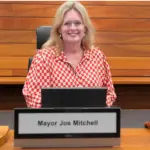
Mayor Jos Mitchell, in a foreword to the strategy, said the plan was about giving the community more choice in how it moved around the city.
“At the heart of the Redlands Coast Active Transport Strategy is a desire to provide our community with greater choice over how we move around the city,” she said.
“This Strategy is a unique opportunity to reimagine travel for our residents and visitors, with a focus on making more walking and riding facilities available within five kilometres of our major destinations.”
She said the city would need stronger alternatives to car travel as growth continued.
“With the number of people living in the city expected to increase by 50,000 people and another 20,000 people forecast to be working within our borders over the next 20 years, effective alternatives to car travel will be required to help take pressure off the road network,” Mayor Mitchell said.
The strategy makes clear council believes the city has strong foundations to build on, pointing to Redlands’ more than 565km of pathways, its coastal setting and a large number of short local trips that could potentially be shifted away from cars.
According to the document, almost half of all trips made in the city are less than five kilometres and 25 per cent are under two kilometres.
About 60 per cent of school trips are less than three kilometres.
But despite those advantages, active travel participation has been sliding for decades.
The report notes the proportion of children walking or riding to school in Australia fell from 75 per cent in 1970 to 25 per cent by 2010, while in Redland City 90 per cent of journey-to-work trips are made by private vehicle, compared with just 2 per cent by active transport and 4 per cent by public transport.
Council says that trend has helped fuel congestion and made conditions more intimidating for pedestrians, riders and people with disabilities, creating a cycle in which fewer people feel safe enough to walk or ride.
Locally, the strategy says Redland City recorded 180 crashes involving pedestrians or riders between 2020 and 2024, while some of the city’s most complained-about trouble spots include major intersections such as Shore Street West and Wellington Street in Cleveland and Moreton Bay Road and Redland Bay Road in Capalaba.
Those intersections are identified as examples of places where people feel active travel is too dangerous, with the strategy arguing safer crossings, better lighting, speed management and more separation between walkers, riders and traffic will be crucial if uptake is to improve.
The plan’s core focus is to build out active transport catchments within five kilometres of major destinations, including schools, town centres, shops, public transport hubs, ferry terminals, community facilities and parklands.
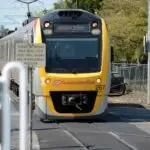
Council also wants to improve “last mile” links to train stations, bus stops and interchanges, continue filling missing footpath and cycleway gaps, and require developers to deliver better-connected internal walking and riding networks as part of new projects.
The strategy places a strong emphasis on equity, saying better active transport infrastructure is especially important in a city with an ageing population and significant numbers of residents who either cannot drive or do not have regular access to a car.
Redlands has a median age of 43 — seven years older than Greater Brisbane — while one in five residents are already aged over 65 and that is projected to rise to one in four by 2046.
About 4.5 per cent of households do not own a car, while around 20 per cent of the population is under driving age and 9 per cent is over 75.
The islands are singled out as another major opportunity, with the strategy saying places such as North Stradbroke Island, Russell, Macleay, Lamb, Karragarra and Coochiemudlo are naturally suited to more walking, cycling and micro-mobility because of their shorter trips, scenic environments and reliance on water transport to connect with the mainland.
Council is also using the strategy to respond to the rapid growth of micro-mobility, including e-bikes and e-scooters, which it says can expand travel choice but also create safety and parking issues if not managed properly.
The document notes a Queensland parliamentary inquiry into e-mobility reported in 2026 with 28 recommendations, all accepted or accepted in principle by the State Government, and flags the possibility of future council policy work on micro-mobility, including hire trials, parking and speed management.
Beyond infrastructure, the strategy pushes for more behaviour change programs, education campaigns and incentives designed to make walking and riding more appealing.
That includes expanded wayfinding signage, updated maps and route information, support for events, workplace travel plans, school-based initiatives such as Walking School Buses and safer school travel programs, and improved end-of-trip facilities such as secure bike parking, lockers, showers and change rooms.
Council also wants to pilot programs for its own 1100 staff before extending ideas more broadly to employers and organisations across the city.
The strategy argues that lifting active travel is not just a transport issue but an economic, health and liveability issue, with potentially major savings if fewer people rely on private vehicles.
The agenda report says Redlands households face significant transport costs, with a typical South East Queensland household spending about $23,000 a year on owning and running a car.
It also cites research suggesting active transport investment could save up to $100 million a year in congestion costs, $4 million in health costs and up to $3.5 million annually in climate offsets, while generating returns of up to 13 times for pedestrian and disability-focused infrastructure and five times for cycling facilities.
The strategy also argues more walkable and bike-friendly centres can support local business.
It cites research suggesting a single parking space generates less retail turnover than the same space used for bicycle and e-scooter parking or dining.
Council currently allocates about 13 per cent of its transport budget to active travel, while the strategy says State and Federal governments invest about 1 per cent.
It argues a “pivotal shift” in investment from all levels of government will be needed to meet the city’s long-term targets.
While there are no immediate financial implications for this year, the broader agenda report says council spent $4.68 million on active transport in 2024-25 and proposes a stepped increase to about $6.5 million by 2046 in 2025 dollars, excluding replacement costs from natural disasters.
Over the next five years, council’s priority initiatives include delivering active travel network plans for high-needs areas, fixing critical gaps within five kilometres of major destinations, rolling out travel behaviour change programs, stepping up advocacy to other governments, embedding better standards in the City Plan and delivering named recreational and tourism routes.
That tourism angle is also a clear part of the pitch, with the strategy linking improved paths and corridors to the city’s visitor economy, the Moreton Bay Cycleway and opportunities tied to the Brisbane 2032 Olympic and Paralympic Games.
The officer recommendation before councillors is that the Redlands Coast Active Transport Strategy be adopted.