



A BAYSIDE Council has voted unanimously to investigate how North Queensland councils manage their vegetation ahead of cyclones as it looks to strengthen its own approach in the wake of recent storm damage.
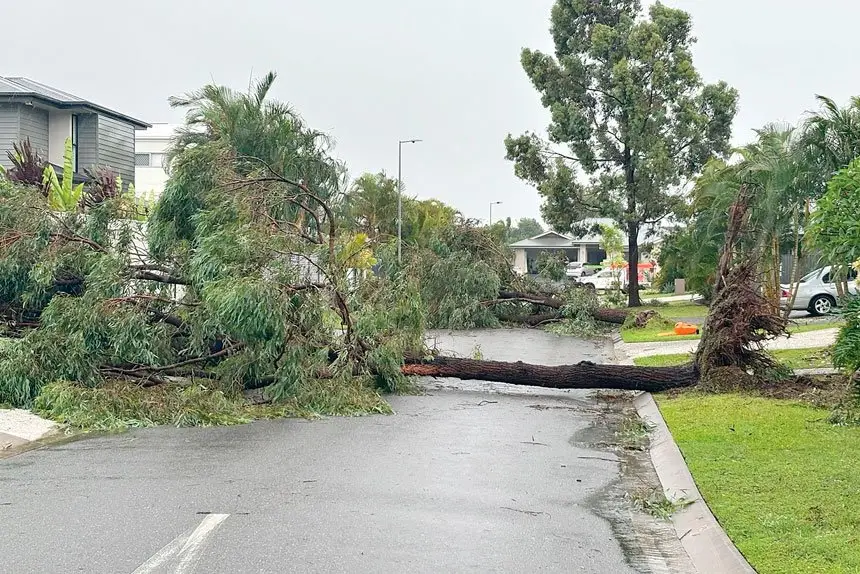
The move comes after ex-Tropical Cyclone Alfred left a trail of destruction across the city in March, despite being downgraded to a low-pressure system before making landfall.
Redland City Councillor Jason Colley, who introduced the motion, said the damage highlighted the need for a more proactive approach to tree management.
“Despite being downgraded, ex-Tropical Cyclone Alfred left a trail of damage in its wake last month, largely due to fallen trees and tree limbs,” Cr Colley said.

“Numerous public and private properties sustained damage, and prolonged power outages were also caused by vegetation taking out critical infrastructure.”
Redland City Council is responsible for managing nearly 200,000 trees on its streets and around parklands, with much of that work carried out in response to community requests.
“With a tree program that is predominantly reactive – meaning assessment and maintenance is generally done in response to a customer query or request – it’s important Council officers are empowered and equipped to deliver solutions that protect people and property,” Cr Colley said.
He said the community had raised concerns about the city’s preparedness for extreme weather events, and believed Redland could benefit from the experience of councils in cyclone-prone regions.
“While ex-Tropical Cyclone Alfred was the first of its kind in South East Queensland for more than 50 years, many parts of North Queensland experience cyclones and extreme weather events far more frequently,” he said.
“A future review of our tree management policy will best be informed by learning from those who have robust practices in place to mitigate the impact when disaster strikes.”
Under the adopted motion, officers from Council’s Parks and Conservation Team will work with their counterparts in North Queensland to explore best practices.
A report outlining those learnings and potential policy improvements will be brought back to Council for consideration.