



THE Redland Community Centre’s inaugural Stop Bullying Forum aimed to break the silence and spark important conversations around bullying in the community.
On November 26, school representatives, residents, and community leaders gathered at Alexandra Hills State High School to ask questions, share insights, and contribute to fostering a safer, more supportive environment for all.
Led by Redland Community Centre CEO Allison Wicks, the event aimed to open a crucial dialogue around bullying and its impacts.
“This forum wasn’t about fixing everything, it was about starting a conversation,” Wicks said.

“Ignoring the topic won’t make it go away, and if we can’t discuss it openly, we’ve already lost the battle.”
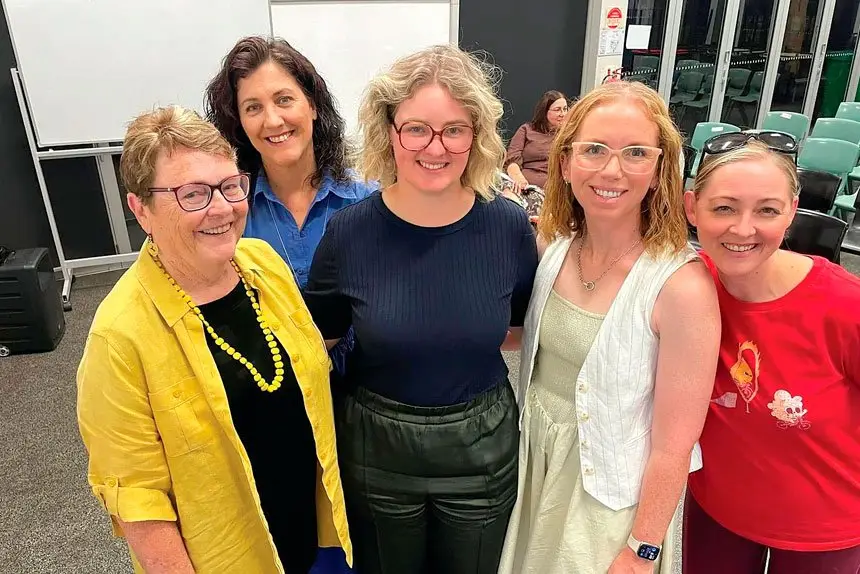
Panellists included Professor Marilyn Campbell, an expert in youth anxiety and cyberbullying; clinical psychologists Debbie Jeffries and Rachael Harris from Redlands Psychologists; and Sage Rizk, a school chaplain at Alexandra Hills State High School.
Together, they tackled pressing questions about the definition of bullying, emerging trends, and how schools, governments, and the community can respond effectively.
From the discussion, Ms Wicks noted that parents found addressing bullying directly with the perpetrators to be the most successful strategy, citing perceived inaction at the school level.
She shared that panellist Rachael Harris highlighted a shift in perspective, suggesting that the bully, rather than the victim, should be sent to counselling – a strategy that had gained traction over the more common approach of counselling the victim.
“Rachel said it was difficult for the child to go into the school counsellor because they were already the one who were seen to have something wrong with them,” Ms Wicks said.
“Perhaps it’s time we consider sending the bully instead, flipping the narrative to address the root cause.”
Discussions also explored the role of social media, with Professor Campbell and Ms Jeffries noting that while social media was not the root cause of bullying, it now played a continuous role in perpetuating it.
“Before social media, kids would go home and all the bullying would switch off,” Ms Wicks said.
“Now, kids come home to a barrage of social media bullying.”
Reflecting on the event, she called it a resounding success.
“It’s all about being brave enough to get the community to start talking,” she said. “If we keep communicating, we can solve a lot in the world.”