



Deputy Mayor warns bureaucratic hurdles leave sports facility in limbo
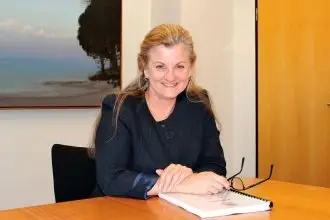
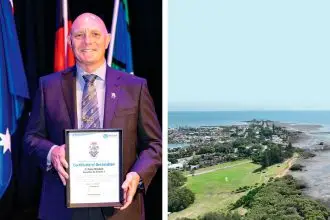
REDLAND City Deputy Mayor Julie Talty has hit out at federal approval processes she says have left the long-awaited Heinemann Road sports facility in limbo.
In an opinion piece, Cr Talty describes the project as a “case study in all that is wrong” with Australia’s system for assessing community infrastructure projects.
She argues that despite years of planning, consultation and environmental studies, shifting federal requirements have rendered the project unviable.

“To build the equivalent of 14 football fields, they are demanding offsets equal to 150 football fields of tree planting,” Cr Talty said.
She warns the issues go beyond the Heinemann Road site, claiming every future community infrastructure project in Redlands could face similar delays.
By Deputy Mayor Cr Julie Talty
Red tape strangles Heinemann Road sports project
THE timeline of the Heinemann Road sports facility is a case study in all that is wrong with Australia’s approval processes.
As a nation, we have tied ourselves into well-meaning but hopelessly complicated knots when it comes to delivering community infrastructure.
Trying to follow the rules has become an exercise in farce – something the fictional bumbling bureaucrats from the ABC sitcom Utopia would find all too familiar.
Back in 2006, Redland’s planning scheme first recognised the area’s predicted population growth and the need for new community sporting facilities.
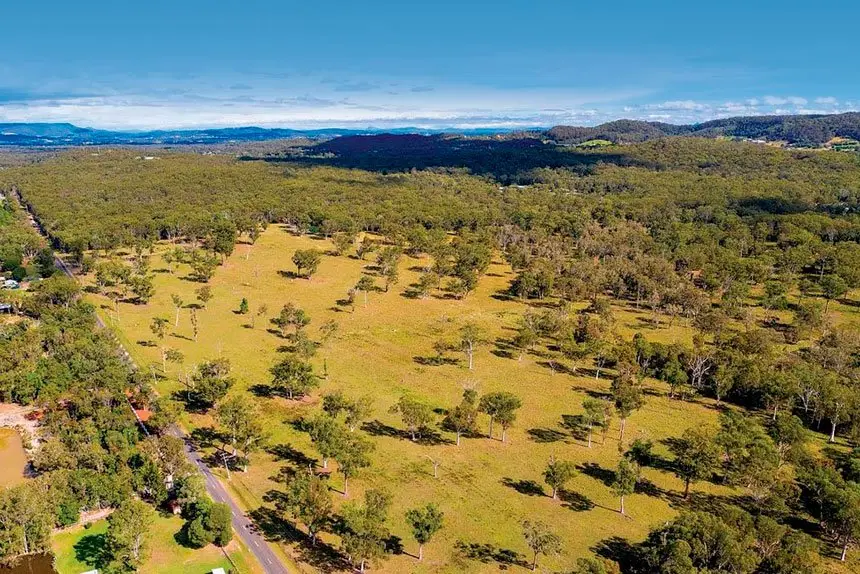
A 168-hectare parcel of land on Heinemann Road was identified as a future site.
Council voted in 2010 to add it to their register of land desirable for purchase.
Local farmers and landholders bristled at the secrecy of the process, fearing their own properties might also be targeted.
After years of negotiations, Council finally bought the site in 2017, under the strict financial rules that apply whenever government acquires land.
What followed was a lengthy series of studies on geography, engineering, environment and community need.
By 2019, community consultation and master planning had been completed.
In May 2020, Council endorsed a bold plan for the site – 13 touch football fields, three rugby league fields, two clubhouses, 800 car parks, recreation areas, a pump track, picnic facilities, plus a new BMX club base and road cycle track.
It was to be a project of regional significance, boosting the economy and serving as a major sporting hub.
By 2022, detailed costings and staged construction plans were in place, and contracts had been awarded to begin earthworks and entry upgrades.
Then came the hammer blow.
The Federal Government upgraded the endangered status of the koala, sugar glider and glossy black cockatoo.
New metrics for environmental offsets were introduced – and backdated.
Suddenly, a project that had met all local, state and federal environmental requirements was pushed back into federal hands for reassessment.
In February 2023, the project was declared a “controlled action.”
In plain English, that meant more bureaucracy, more delays, and more moving goal posts.
Council’s decision to self-refer for assessment instead of pushing ahead may have cost the community dearly.
The result?
Three years, three reworked plans, and a project now deemed unviable.
To build the equivalent of 14 football fields, the Federal Government is demanding offsets equal to 150 football fields of tree planting.
In Redlands – where tree planting has been pursued voluntarily for decades – this is impossible to deliver.
The policy may make sense in wide regional areas with cleared farmland ready for replanting, but it does not fit the reality of Redlands.
Worse still, this sets a precedent that threatens every future community infrastructure project, from roads to recreation.
Meanwhile, the State Government continues to push for massive residential growth, even declaring another Priority Development Area at Southern Thornlands.
Yet the Federal Government’s hurdles make the infrastructure to support that growth almost impossible to deliver.
As these inequities play out, construction costs have soared by up to 70 per cent.
Ratepayers are left carrying the burden, while traffic worsens, sporting facilities fall further behind demand, and housing growth charges ahead without matching community infrastructure.
At the August General Meeting of Council, I moved a motion calling on Federal Minister Murray Watt to intervene, and to recognise Redland’s exceptional environmental record – decades of planting and protection programs that his department’s blunt matrix simply ignores.
The Heinemann Road saga is more than a stalled sports project.
It is proof that the current system is broken – a tangle of red tape where community needs are endlessly delayed, and common sense is lost.