



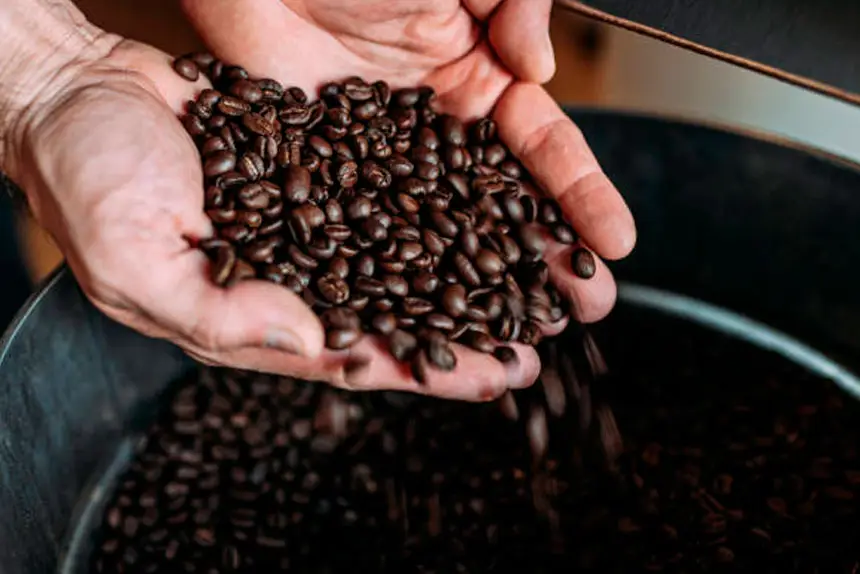
IT seems the Australian coffee industry is percolating again, with growers gaining access to four new arabica coffee varieties through World Research International.
These new varieties have given coffee growers fresh hope – an opportunity to grow something different for a market that quite literally runs on coffee. After all, who doesn’t start the day with at least one cup?
In a previous column, we explored the idea of growing coffee at home. After much heart ache – and the realisation that you’d need considerable space and patience – it became clear that coffee is one crop best left to large-scale growers. From planting to harvest, coffee takes around four years to mature, and production itself is a craft not to be taken lightly.
Much like wine or spirits, coffee must be carefully nurtured, processed and brewed just right. It’s no wonder Australia’s coffee culture has become so deeply ingrained – not only in our capital cities, but in regional towns and small communities right across the country.

Arabica remains the backbone of Australian coffee production, while robusta – an entirely different species – has not been approved for cultivation here. Far North Queensland accounts for about 85 per cent of Australia’s coffee output, with the Tablelands producing roughly 800 tonnes each year. That’s modest compared to Brazil, the world’s largest producer, which grows more than four million tonnes annually.
Still, the Tablelands offer near-perfect conditions: rich soils, elevation and reliable rainfall – everything coffee plants need to thrive.
Looking beyond coffee, forward-thinking agriculture is also taking shape elsewhere. In Mudgee, New South Wales, a large winery has become one of the first in Australia to operate entirely off the grid. The vineyard, winery, cellar door and restaurant are now powered by a comprehensive solar and battery system, featuring 414 solar panels (265kW) and 1.2MWh of battery storage, engineered to deliver seamless three-phase power across the property.
The owners have embraced a holistic vision, establishing what they call a “climate change vineyard”. They are proactively planting grape varieties suited to projected future conditions – anticipating a climate more like southern Italy.
Across industries, businesses are clearly thinking ahead – planting, building and investing with changing weather patterns firmly in mind.
And as artificial intelligence is predicted to infiltrate every sector, now and into the future, one can’t help but wonder just how different the world might look in 50 years’ time.
Till next time!