



Quandamooka man Darren Burns has won a long-running legal battle over allegations he unlawfully cleared native vegetation on North Stradbroke Island, with Queensland’s highest court ruling that he acted under an honest claim of right based on his understanding of traditional cultural practice.
In a complex judgment traversing Indigenous rights, environmental law, and criminal intent, the Court of Appeal dismissed the Redland City Council’s bid to overturn the District Court’s decision that had set aside Burns’ original conviction.
The court accepted that while there was no evidence proving the clearing was part of a traditional Quandamooka cultural activity, Burns genuinely believed he had a traditional right to “blaze, clear and build” on the land for his family — a belief that, though mistaken, was honestly held.
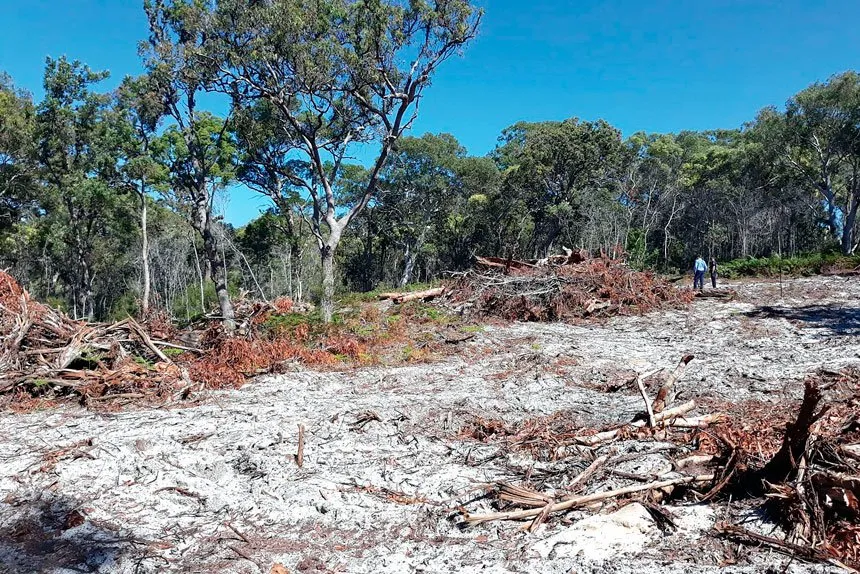
The case began when Burns arranged for a contractor with an excavator to clear about 2,400 square metres of land on North Stradbroke Island, which he considered part of his ancestral country.

He told the contractor, “It’s me, it’s native title land… you won’t get in trouble,” before proceeding with the work to prepare the site for a house for his daughter.
Redland City Council charged Burns with unlawfully clearing vegetation under Queensland’s Vegetation Management Act, arguing the clearing was substantial, mechanical, and inconsistent with any form of traditional cultural activity.
The Magistrates Court found him guilty, rejecting arguments that the clearing fell within a “traditional Aboriginal cultural activity” exemption or was protected under the Native Title Act.
In sentencing, the Magistrate described the clearing as “a cynical land grab”, concluding that the activity was motivated by a desire to build a private dwelling rather than to exercise cultural rights.
On appeal, the District Court overturned that conviction, ruling the Magistrate had failed to properly consider section 22(2) of the Queensland Criminal Code, which provides that a person is not criminally responsible for an act done in the exercise of an honest claim of right.
The District Court judge found that Burns’ evidence — including his statement that the use of an excavator was “just like a stronger stick for cleaning the land” and part of adapting traditional practices — was enough to raise the defence.
The judge accepted Burns’ claim that Quandamooka people had historically marked and cleared land to assert connections to country and build shelter, even if the modern means of doing so had evolved.
Once the defence was raised, the onus shifted to the prosecution to disprove it beyond reasonable doubt — a burden the Council failed to discharge.
The Council then sought leave to appeal to the Court of Appeal, arguing the District Court had erred by accepting Burns’ belief as “honest” despite findings that no such traditional practice existed in evidence.
But the appellate judges rejected that argument, confirming that the defence of honest claim of right under section 22(2) can apply even where the belief is wrong or unreasonable — provided it is genuinely held.
Justice observed there was “something of a tension” between findings that no cultural right to clear land existed and the acceptance of Burns’ belief in such a right, but said this was consistent with the operation of section 22(2).
The District Court judge did not need to find Mr Burns held that belief, only that it was sufficiently raised on the evidence to require it to be disproved beyond reasonable doubt,” the judgment stated.
The Court noted that while the clearing was conducted by a contractor using modern earth-moving machinery — “a novel adaptation of traditional practice” — that did not automatically defeat the claim of right, if Burns believed it was permissible under his culture.
The Court also accepted that Burns’ belief need not be correct in law.
A belief that he was entitled by native title rights to clear land would rise no higher than ignorance of the law,” the Court said.
“However, the existence of the cultural activity exemption changes the position. If he was correct in his belief that he had a traditional right to blaze, clear and build, that would have excluded the clearing from the scope of the offence.”
Ultimately, the Court found there was sufficient evidence to support the District Court’s conclusion that the Council had not disproved Burns’ honesty beyond reasonable doubt.
Final orders
The Court of Appeal ordered:
- Leave to appeal granted;
- The appeal dismissed; and
- Redland City Council to pay Burns’ legal costs.
The ruling effectively affirms that an honestly held belief in a traditional right, even if wrong in law or unsupported by evidence of antiquity, may still operate as a defence under Queensland’s criminal code.
The case has been closely watched by Indigenous leaders and legal observers as a test of how traditional cultural rights interact with environmental regulation and criminal liability in modern Australia.
A Redland City Council spokesperson said: “While disappointed, Redland City Council acknowledges and respects the Court of Appeal decision and is currently reviewing the judgement.”