




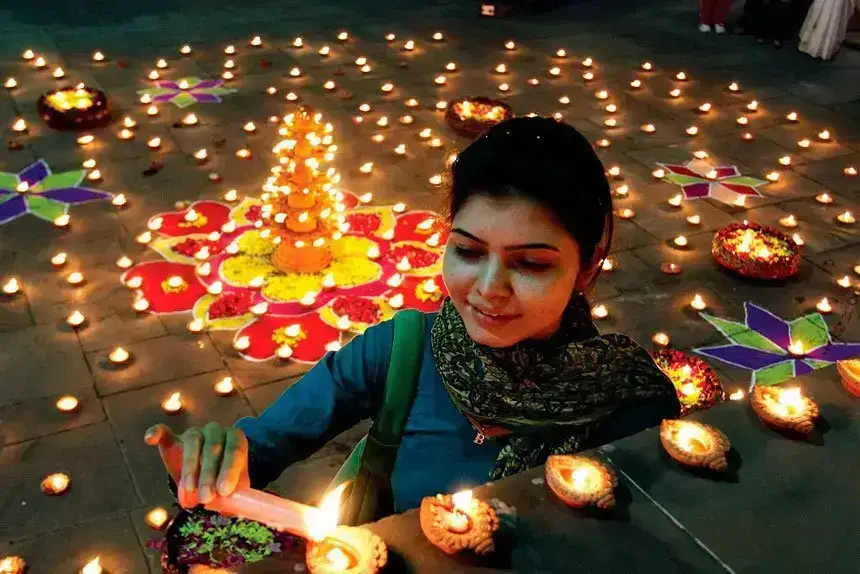
AROUND one billion people worldwide mark Diwali each year, making it one of the most widely celebrated festivals in the world.
Also known as Deepavali, the Hindu “Festival of Lights” originated in India more than 2500 years ago.
The celebration typically lasts five days, although in some communities it may be observed over a single day.
Following the lunar calendar, the festival aligns with the darkest night of the year, symbolising the triumph of light over darkness.

While mostly associated with Hindus, Diwali is also observed by Sikhs, Jains and Buddhists, each weaving their own traditions and stories into the celebration.
For many Hindus, Diwali marks the return of Lord Rama after 14 years of exile, while others celebrate the victory of Lord Krishna over the demon Narakasura.
The goddess Lakshmi, symbolising wealth and prosperity, is also central to the holiday.
For Sikhs, Diwali commemorates the release of Guru Hargobind from imprisonment.
Jains remember the day their revered teacher, Lord Mahavira, attained enlightenment.
Despite different narratives, a common thread runs through all traditions: hope, renewal and the victory of goodness.
The name Deepavali means “garland of lights”.
Oil lamps, lanterns and candles illuminate homes, streets and temples, creating a dazzling spectacle against the night sky.
Clean, well-lit homes are said to invite the blessings of Lakshmi.
Fireworks, colourful rangoli patterns at doorsteps, and the wearing of vibrant colours like red – associated with life and abundance – all add to the celebrations.
Food plays a central role.
Families share lavish meals and traditional sweets such as jalebi, almond burfi, and the cotton candy-like soan papdi.
Some communities create a “mountain of food”, symbolising abundance and gratitude, which is later shared among families, friends and neighbours.
Although deeply rooted in South Asian traditions,
Diwali is celebrated far beyond India. Communities across the globe host light displays, cultural performances, prayers and feasts.
And you don’t need to be Hindu or Indian to join in.
Offering sweets, greeting friends with “Happy Diwali”, or learning about its traditions are meaningful ways to share in the joy.
At its heart, Diwali is a festival of renewal – a reminder to honour the light within us and in others, and to embrace the victory of knowledge, goodness and hope.