



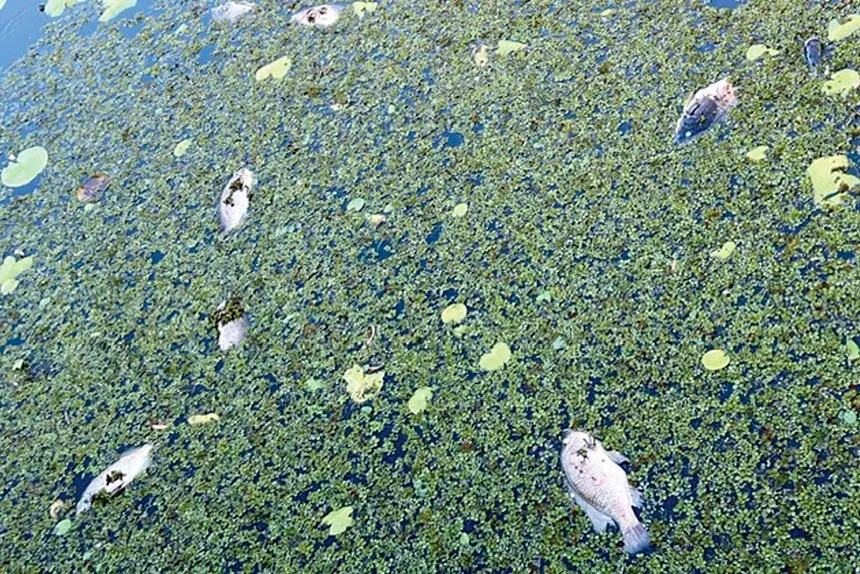
A TROUBLING environmental incident has sparked concern among residents and wildlife enthusiasts after hundreds of dead fish and eels were discovered in the lower lake of Crystal Waters Wetlands in Thornlands.
The discovery was made by long-time local resident Kristen Dodd, who described the scene as “horrible” and “heartbreaking”.
Ms Dodd, who has lived in the area for 28 years, reported noticing a strong, unpleasant smell on her morning walk.
Upon reaching the lower lake, she observed large numbers of dead fish and eels, as well as many more struggling to breathe along the lake’s edges.

“I’ve never seen anything like this in all my years living here,” Ms Dodd said.
“The lower lake hasn’t been cleared of weeds, and I believe that’s causing a lack of oxygen, which is affecting the wildlife.
“It’s truly heartbreaking to see these poor animals struggling.”
The lake, which serves as a vital habitat for various species of fish and waterfowl, has been grappling with excessive weed growth, and residents have expressed concern that the accumulation of weeds is depriving aquatic life of oxygen.
This issue, left unaddressed for some time, appears to have reached a crisis point.
While Ms Dodd has made repeated attempts to contact local authorities to report the situation, she has faced difficulty getting through to the appropriate channels.
“I’ve been trying to reach the right people to see what can be done,” she said.
Environmental experts say that the combination of excessive aquatic weeds and a lack of oxygen can create an environment where fish and eels are unable to survive.
The weeds can block sunlight from reaching the water, preventing oxygen exchange and leading to low oxygen levels that can cause aquatic species to suffocate.
Cr Paul Golle, informed of the situation by Ms Dodd, reassured residents that action has been taken.
He confirmed that Council environmental teams had been deployed to address the issue.
A Council spokesperson said Redland City Council had investigated the cause of several dead fish at Crystal Waters Wetlands.
“The fish were identified as tilapia and were removed by Council workers and contractors,” the spokesperson said.
“The investigation conducted by a Council environmental health officer did not reveal signs of water contamination.
“It was determined the likely cause was a naturally occurring event that occurs in warmer months and can result in low levels of dissolved oxygen in the water.
“Council will continue to monitor the site and manage the vegetation across the waterways.”