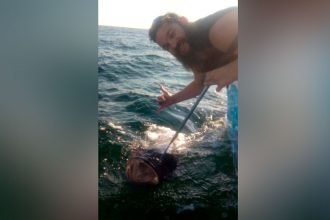





FOR spear fisherman Craig McKeown, the key to catching fish lies in a technique as simple as it is effective – staring the fish in the eye.
“The longer you can hold your breath, the better access you have to the scarcer fish species,” McKeown said.
“The best fish are in deeper waters.”
McKeown, 62, who continues a family tradition each time he free dives for fish, is well-versed in the challenges and rewards of the sport.

According to him, the winner of spear fishing competitions is the fisherman who can collect the most species in a six-hour period.
Although skilled at spearing fish and often filling his freezer, McKeown admits he’s not at competition level, as his breath-holding capacity is not as long as some of his fellow diving mates.
Originally from New Zealand, he credits his uncle with being a pioneer of the wetsuit in the 1950s, starting the trend to wear rubber for warmth and protection.
His uncle also made his own spear guns, handcrafted from cedar and stainless-steel spear shafts and floppers.
“You attach this to a line with a buoyant float and retrieve the gun when you retrieve the fish,’ he said
“You hickey the fish, then rinse and repeat.”
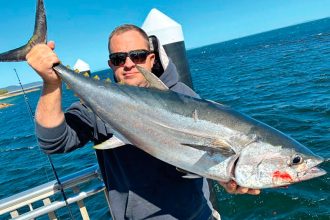
The targeted species include blue cod, snapper, trevally, terakihi, butterfish, blue moki, crayfish and kingfish.
These fish are often caught in New Zealand waters off the family bach, where they are cooked fresh from the sea on an open fire.
McKeown is also known for his own innovations, such as building the first aluminium pontoon based on the design of a zodiac.
“I always wanted my own zodiac, but I didn’t like the idea of putting a spear in a blow-up boat, so I built one from aluminium,” he said.
His experience and knowledge of the sport also come from his deep connection to the waters and the fish.
He prefers to return to familiar fishing spots where he knows the behaviour of the fish, living in various rocks and pinnacles.
“You don’t need to go in blind,” he said.
“Certain species have the same homes, just like you and me.”
According to McKeown, species such as kingfish enjoy the currents, and the key is staying still and waiting for them to swim past.
Snapper, on the other hand, are much more elusive and present a greater challenge.
He also factors in the tides, studying the incoming and outgoing water to better target certain species.
“Local knowledge is key,” he said.
Despite the sport’s competitive aspect, McKeown’s love for spear fishing is rooted in its therapeutic qualities.
He finds the sport mesmerising and believes it is an art.
“I enjoy this as a sport,” he said.
“It’s just mesmerising.
“You don’t have a hook – you are the hook.”
For McKeown, it’s not just about the fish; it’s about the feeling of serenity the sport provides.
“You must achieve a sense of calmness and peace so that you expend the least energy,” he said.
“It gives you a heightened sense of sight and a spiritual feeling. Breathing is everything. It’s therapeutic really.”