



Mum launches new social enterprise to support trauma survivors
WHEN Katie Palm lay awake at 2am, exhausted from chemotherapy and the relentless grind of motherhood, she had a thought that would change her life – and, she hopes, the lives of countless others.
“I just remember thinking how good it would be to talk to someone who truly understands,” she said.
“Someone who’s been through it – the loss, the trauma, the fear – and can say, ‘You’re not alone’.”
That late-night thought became the seed of The Patient Approach, a new social enterprise Katie co-founded to support people recovering from trauma, illness and life-changing diagnoses.

It’s a mission born from deeply personal pain.
The 37-year-old Cornubia mother has endured multiple pregnancy losses, two exceptionally rare cancers, and the emotional isolation that comes with both.
She and her partner Ryan spent four and a half years trying to conceive.
“We went through all the tests, IVF – all that fun stuff,” she said.
“The first pregnancy ended up being ectopic. I woke up one morning bleeding and had to go to hospital.”
That hospital experience, at Logan, still haunts her.
“They put me in a hallway with about half a dozen chairs and made Ryan wait in the waiting room. Hours went by before anyone realised, I’d been ‘mis-categorised’,” she recalled.
“After surgery, a nurse handed me a pad and said, ‘There’s the toilet if you want to get changed’.
“I asked if they’d taken my tube. She said: ‘Oh, I don’t know.’ Then she came back and said, ‘Yep, we did.’ That was it – no follow-up, no call, nothing.”
Months later, another heartbreak followed – a miscarriage, this time at Redland Hospital.
“The nurse told us: ‘The surgical team finishes at 4pm, so you’ll have to come back Monday.’ Again, no one offered help or told us where to go for support,” she said.
Eventually, against all odds, Katie fell pregnant naturally and gave birth to two “miracle boys” – now aged seven and four.
But the family’s joy was short-lived.
In 2021, Katie was diagnosed with Langerhans Cell Histiocytosis, a cancer so rare it affects only one in five million people.
“At that stage my kids were three and eight months old,” she said.
“I did 12 months of chemo at Greenslopes Hospital. Same thing again – no real information about where to go for support or who to talk to.”
A year later came another devastating blow – Ewing’s Sarcoma, a childhood bone cancer that, in Katie’s case, developed in her salivary gland.
“The surgeon said I’ll probably make every medical journal because it’s that rare,” she said.
Her treatments are long and punishing.
“Next week I’ll be in hospital for a full week. I start chemo every morning at 8am and finish around 11.30pm. Then they wake me up at 4am for bloods and it starts all over again,” she said.
What hurt most, she said, wasn’t just the illness – it was the isolation.
“I even called the Cancer Council for counselling, but they said they didn’t cover my cancer and told me to call the Leukaemia Foundation. I called them, and they said to call the Cancer Council. I was literally being bounced back and forth. I just needed someone to talk to.”
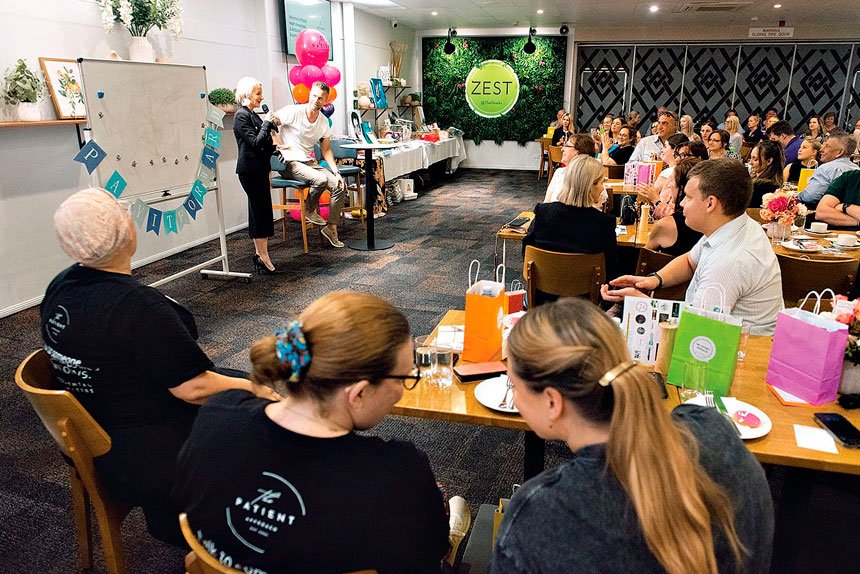
Now, through The Patient Approach, Katie and lived experience mentor Carla – a Mount Cotton mum and amputee who has faced her own battles with cancer, pregnancy loss and raising a neurodiverse child – are creating the support they never had.
“Between us, we’ve been through infertility, loss, cancer, and recovery,” she said.
“We know that when the treatment ends, the emotional fallout doesn’t. We want to be there for people through that.”
The charity offers counselling and peer support and has created a “Pay It Forward Fund” that allows local businesses and individuals to sponsor mental health sessions for people who can’t afford them.
“Financial status shouldn’t determine who gets help,” Katie said.
“The fund also helps with room hire or home visits, so we can reach people wherever they are.”
Katie hopes to partner with hospitals to ensure patients leaving wards aren’t left adrift.
“There’s nothing worse than being left to your own devices and not knowing where to turn,” she said.
“When I had my first pregnancy loss, I remember driving home one night crying, thinking about hitting the light posts along the highway. That’s how mentally broken I was. It could have easily gone the other way – and no one should ever feel that alone.
“Saying things out loud, without fear of judgment, is incredibly powerful. Having that space is life changing.”
For more details, visit thepatientapproach.com.au or call 0426 212 128.