




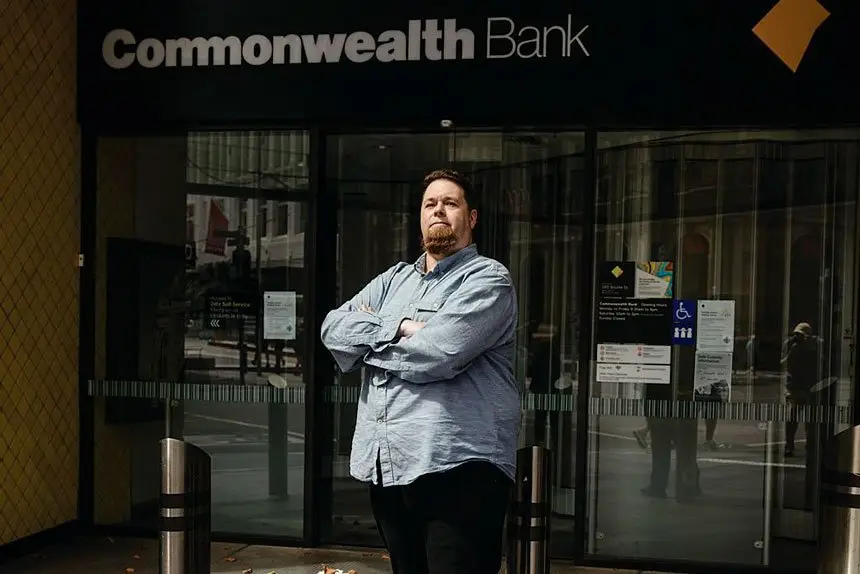
COMMONWEALTH Bank call centre worker Adrian Thoen was devastated when he found out he was among thousands of workers at the nation’s biggest bank being underpaid to the tune of $16 million.
He was employed on a flexible contract instead of a standard enterprise agreement, with more than 7000 workers losing out on money and entitlements.
“When I was hired they put a contract in front of me to sign, they didn’t mention what type of contract it was,” Mr Thoen said.
The bank and its subsidiary CommSec were fined a record $10.3 million in the Federal Court in early 2024 after self-reporting Fair Work Act breaches, which the Ombudsman said were “committed knowingly and systematically”.

Commonwealth Bank and CommSec previously said any instance of its employees not being paid their correct entitlements was unacceptable and their remediation program had started as far back as 2018.
“In response to these issues, systems and processes have been strengthened and CBA and CommSec have not offered any new Individual Flexibility Arrangements for more than two years,” the bank said in 2021.
Adrian and his colleagues received full back pay with interest and he hopes no more workers will have to go through a similar ordeal, as laws designed to safeguard workers come into force from January 1.
It is now a criminal offence to intentionally underpay workers, with employers facing fines of up to $7.8 million or three times the amount that was underpaid, up to 10 years in prison or a combination.
Australian Council of Trade Unions acting secretary Joseph Mitchell believes the penalties will be a deterrent against underpayments as it stops the practice becoming part of a “business model”.
He said wage theft occurred in every industry but was particularly prevalent in retail, hospitality, construction, transport and university sectors.
“It is not going to be profitable, it is not going to be viable for businesses to deliberately underpay their staff,” Mr Mitchell said.
The council claims up to one million workers are affected by underpayments including one-in-three casual workers being paid below casual and junior award rates or the minimum wage.
The Opposition voted against the laws in parliament and the legislation remains controversial among some business groups.
Australian Industry Group chief executive Innes Willox said the issues in the legislation should have been left under the Fair Work Act and existing labour exploitation offences in the criminal code.
“Putting criminal penalties in place is simply a sop to some unions to give them more to threaten employers with,” Mr Willox said.