



NESTLED on the western shores of Moreton Bay, Cleveland is a thriving locality that has played a significant role in Queensland’s history.
Today, Cleveland stands as a vibrant transport hub, cultural centre, and residential area within the city of Redland.
Yet, its journey from Indigenous land to European settlement and modern development is a tale rich in history, ambition and transformation.
Before European settlement, Cleveland was the traditional land of the Koobenpul clan of the Quandamooka people.

The Indigenous people had lived in the area for thousands of years, relying on the region’s abundant marine and land resources.
Their cultural connection to the land remains integral to Cleveland’s identity today, as many locals and visitors continue to respect and acknowledge the traditional custodians of the region.
The first recorded European interaction with Cleveland occurred in 1770, when Captain James Cook sailed past the area.
However, the town’s actual European history began in the early 1840s when the land was first surveyed for potential settlement.
Cleveland was initially considered a candidate for a major port due to its proximity to the southern passage of Moreton Bay.
This potential was particularly appealing as Brisbane’s port was hindered by dangerous sandbars.
In 1847, a navigation beacon was placed at Cleveland Point, and by 1850, Cleveland was officially proclaimed a township.
The first land sales followed a year later, primarily around Cleveland Point, with early settlers hoping to capitalise on the area’s strategic location.
However, Cleveland’s early aspirations as a port were thwarted in 1842, when Governor Sir George Gipps visited the area and sank into the mudflats.
His frustrations led to the suggestion of Ipswich as a better alternative, sealing Cleveland’s fate as a port town that would never be.
Despite the setbacks as a port, Cleveland began to grow through agricultural development.
By the late 1800s, the area was known for producing high-quality fruits, vegetables and sugar cane.
The introduction of a rail line to Cleveland in 1889 further spurred growth, with residential subdivisions and tourism becoming key elements of the local economy.
The area’s infrastructure continued to evolve, with the Cleveland Point Light constructed in 1864 to guide ships through the bay.
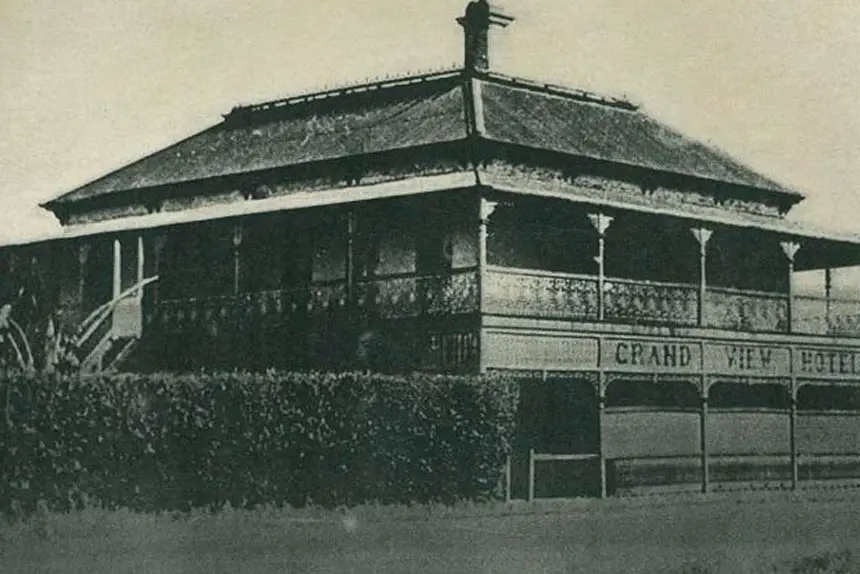
This lighthouse, alongside the Grand View Hotel and Old Courthouse, became symbols of Cleveland’s burgeoning development during the late 19th century.
By the early 1900s, Cleveland’s population had grown modestly.
The town became home to several new services, including the Methodist Church in 1908 and later the Cleveland Uniting Church.
It was also during this period that Cleveland saw its first significant population growth.
By World War I, the population had reached 540, and the town began to solidify its role as a regional hub.
The 1960s marked a period of both decline and renewal.
The rail service to Cleveland ceased in 1960, but the town’s population quickly recovered, surpassing 5000 by the early 1980s.
This surge in population, combined with the completion of the Leslie Harrison Dam in 1969, allowed Cleveland to expand its infrastructure and provide town water to more residents.
In 1983, Cleveland entered a new chapter with the groundbreaking of the Raby Bay canal estate, marking the beginning of a new era of residential development and transforming Cleveland’s waterfront.
By the 1990s, the population had grown to nearly 10,000.
Today, Cleveland is home to several cultural facilities, including the Redland Art Gallery, Redland Museum, and the Redland Performing Arts Centre.
These venues help to preserve Cleveland’s rich history while showcasing contemporary art and culture.
The area’s beautiful parks, such as G.J. Walter Park, offer locals and visitors alike a chance to enjoy the stunning coastal views and tranquil environment.
Cleveland’s transportation links have also remained a key feature of its success.
Toondah Harbour, which serves as the ferry terminal to Stradbroke Island, is central to Cleveland’s identity as a gateway to the islands of Moreton Bay.