



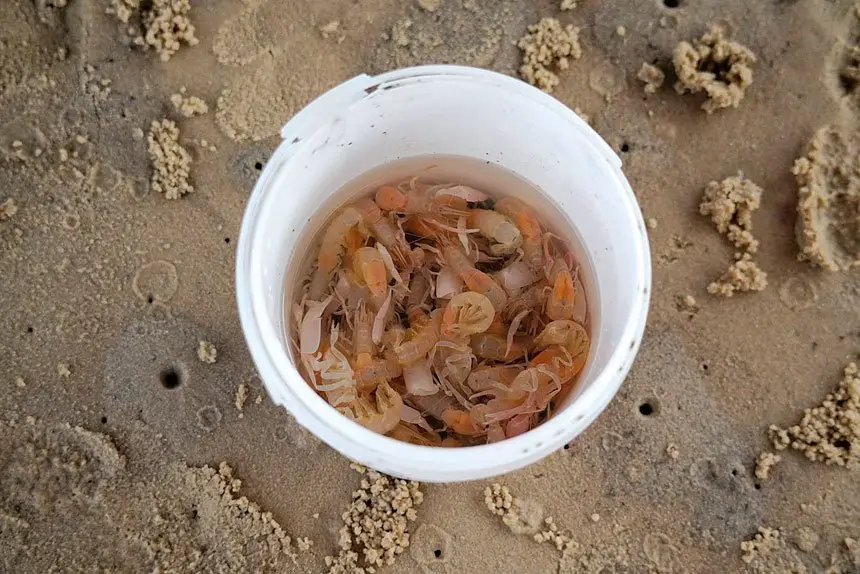
THE fresher the bait, the more appealing it is to fish. Below are some tips for catching and collecting your own bait.
Before you go fishing, make sure you are familiar with the fishing rules and regulations for Queensland. It is important you are aware of the possession limits for bait species. Any species without a specific possession limit is subject to a general possession limit of 20.
Pumping yabbies
Yabbies are easy to catch and are great bait for catching popular estuary species such as whiting, bream, and flathead.
What to do: Look for sand flats at low tide with small holes, as this is where the yabbies live. Using a yabby pump, pump two or three times and direct the sand and water onto the ground.

Look for yabbies crawling around in the sand, mud or water, often spotted by their orange egg sac. Pick them up and keep them fresh in a bucket of seawater.
They may have nippers so be careful when collecting and baiting on your hook as they can pinch.
Note: Yabbies caught in the white spot disease movement restriction area in South East Queensland cannot be moved out of the area unless cooked.
Cast netting
Cast nets are great for catching a range of bait species such as prawns, mullet and herring.
Learning how to throw a cast net correctly takes practice, but once mastered it is an invaluable skill for any fisher.
To get started, speak to the staff at the bait and tackle store when you buy your cast net and they will be able to give you some pointers on different casting techniques.
Alternatively, there are many demonstrational videos available online to help you perfect your technique.
Cast netting prawns – Fresh prawns are great for catching inshore fish species such as whiting, dart, bream, flathead, snapper, and mulloway.
Note: Prawns caught in the white spot disease movement restriction area in South East Queensland cannot be moved out of the area unless cooked first.
Beach worms
Beach worms are great for catching inshore fish species such as whiting, dart, bream, flathead, and mulloway. Beach worms are subject to a possession limit of 30.
What to do: Pipis and fish frames can be used to catch beachworms. Be sure you are within your pipi possession limit of 30 at all times.
Using a bait bag or stocking, fill it with fish frames or pilchards, and wash through shallow water on an ocean beach to attract the worms. Once you locate a worm sticking its head out of the sand looking for the food source, place a small amount of fish about 1cm away and 1cm off the sand. Don’t let the bait touch the worm.
The worm will arch its “neck” out of the sand and grab hold of the bait. At this point carefully slide your fingers, around the worm’s head and grab the worm tightly, but not too tight as to crush it.
Slowly pull the worm out from the sand with an even pressure to ensure you don’t break it.
Store your worms in a bucket of fresh seawater ready for use.
Note: Beach worms caught in the white spot disease movement restriction area in South East Queensland cannot be moved out of the area unless cooked first.
More Info: Department of agriculture and fisheries Queensland