

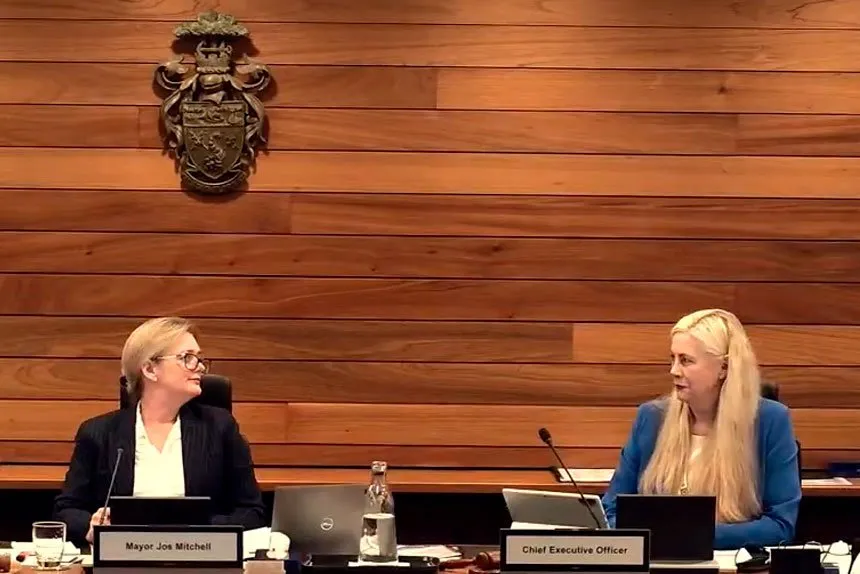
Redland City Council says it acted “with the greatest reluctance” in restricting an Ormiston resident from contacting the organisation after months of repeated correspondence about the city’s $1.70 fee for paper rates notices.
In a letter dated October 23, Council chief executive officer Louise Rusan advised long-time resident Emmanuelle Rousseau that her communications about the levy had continued “for a number of months” despite multiple responses from senior officers.
Ms Rusan said Ms Rousseau’s behaviour showed “unreasonable persistence” and “unreasonable lack of cooperation”, prompting Council to impose restrictions on her future contact.
Under the order, Ms Rousseau is prohibited from making phone calls to Council or its officers, with any such calls to be “terminated”.

She can communicate only in writing—by email or mail—and is barred from raising further questions about Council’s power to charge for paper rate notices.
The restrictions take effect immediately and will remain for 12 months.
Council said the decision was made in line with its Managing Unreasonable Complainant/Customer Conduct Policy, which is based on the Queensland Ombudsman’s framework.
A Redland City Council spokesperson said:
“Council has a Managing Unreasonable Complainant/Customer Conduct Policy which is used to assess and manage repeated customer conduct that raises substantial health, safety, resource or equity issues for the organisation, Council employees and Councillors, other service users, or the customer themself.
Under the policy, Council does not ban customers from visiting or contacting the organisation. Council is able to impose a tailored, 12-month communication plan to manage unreasonable complainant conduct. Each case is individually managed and reviewed, with the Policy itself based on the Queensland Ombudsman’s process.
While Council does not like to take this course of action, sometimes this policy needs to be enacted if there has been ongoing and persistent communications which have been responded to, and/or unreasonable behaviour has been displayed. Customers are able to appeal these restrictions by lodging an Administrative Action Complaint with Council via a form on Council’s website.
In this instance, the customer is permitted to attend Council premises and to communicate in writing or email for all legitimate Council business not relating to the levying of fees for paper rates notices, as Council feels that this matter has been addressed on numerous occasions.”
Ms Rousseau, who has lived in Redlands for more than 30 years, said she was disappointed by the decision and felt her side of the story had been misrepresented.
She has been a vocal critic of the paper notice fee, describing it as “unfair and discriminatory” when addressing councillors earlier this year.
“This fee punishes those who are not digitally connected,” she told the meeting.
“While encouragement to go digital may work for most, penalising residents for circumstances beyond their control is unfair.”
Ms Rousseau said her advocacy was on behalf of older and disadvantaged residents who rely on paper notices, not for personal reasons.
She rejected suggestions she had inundated councillors with correspondence, saying: “Over a three-month period, I would have sent no more than 20 emails to one councillor, and a few to others as a group. Whenever I followed up, it was only because I hadn’t received answers.”
Ms Rousseau said her final communication with councillors was on October 22 and that she stopped contacting Council after that date.
She has called on Council to publicly address the questions she raised about whether the $1.70 charge meets Council’s guidelines on inclusivity and accessibility.