
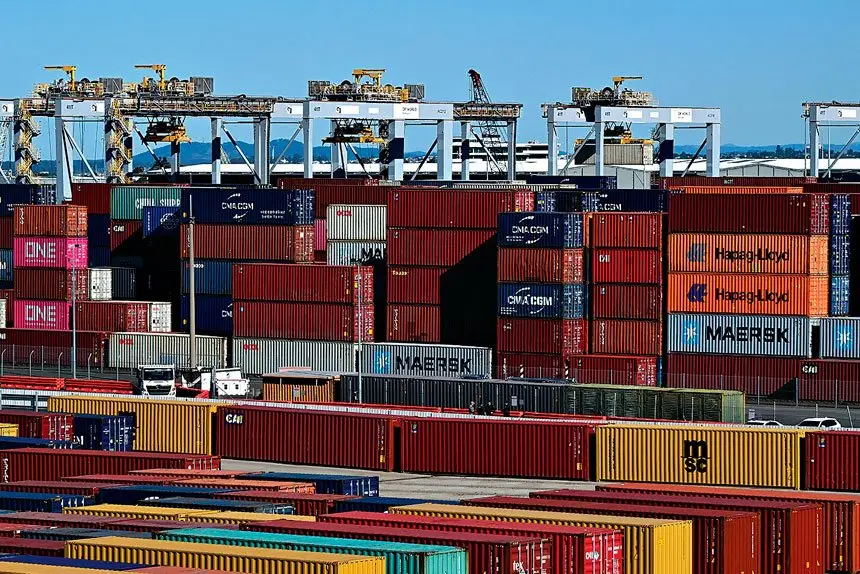
THE Port of Brisbane has laid out its ambitious Vision 2060 blueprint, emphasising climate-resilient infrastructure and environmental stewardship to futureproof one of Australia’s most important trade gateways.
At a recent forum on Climate Change Impacts on Ports held at South Bank’s Ship Inn, the Port’s Executive General Manager of Infrastructure, Daniel Burley, outlined the long-term strategy, which focuses on three central goals: seamless connectivity, clean energy and future-ready design.
The Port of Brisbane Private Limited (PBPL) said Vision 2060 was guided by its commitment to developing infrastructure that can adapt to rising sea levels, extreme weather and shifting water temperatures, all of which present major risks to coastal infrastructure and global supply chains.
The plan is underpinned by the 224-hectare Future Port Expansion (FPE) area on Fisherman Islands – one of the largest land reclamation projects in the Southern Hemisphere, according to the World Ports Sustainability Program.

The expanded area will provide new port land and increased quay line capacity to support future trade growth.
PBPL said it had long invested in environmental monitoring and research programs that inform the sustainable management of Moreton Bay.
These include monitoring of seagrass, coral and mangrove health, sediment and air quality analysis, migratory shorebird tracking, marine pest detection and water quality studies.
Since 2016, PBPL has invested $6.4 million in rehabilitating degraded creek and riverbeds in the Lockyer Valley, more than 100km upstream of the Port.
Additionally, 10ha of coastal land at Whyte Island – home to saltmarsh, mangroves and critical migratory bird habitat – are being restored in partnership with environmental groups.
To date, more than 7ha have been rehabilitated at Whyte Island in collaboration with Bulimba Creek Catchment Coordinating Committee, Tuff Yards and BMT, with plans to complete the remainder soon.
The Port has also restored over 6700sqm of saltmarsh and 1537sqm of mangroves near the Brisbane International Cruise Terminal (BICT), improving marine habitat through fencing, litter removal, foreshore stabilisation and stormwater redirection.
PBPL said the cruise terminal would be central to Brisbane’s economic and tourism future.
Within 20 years of full operation, it is expected to triple the size of the city’s cruise industry – supporting 3750 jobs, attracting over 760,000 visitors annually, and injecting $1.3 billion in net expenditure into the local economy.