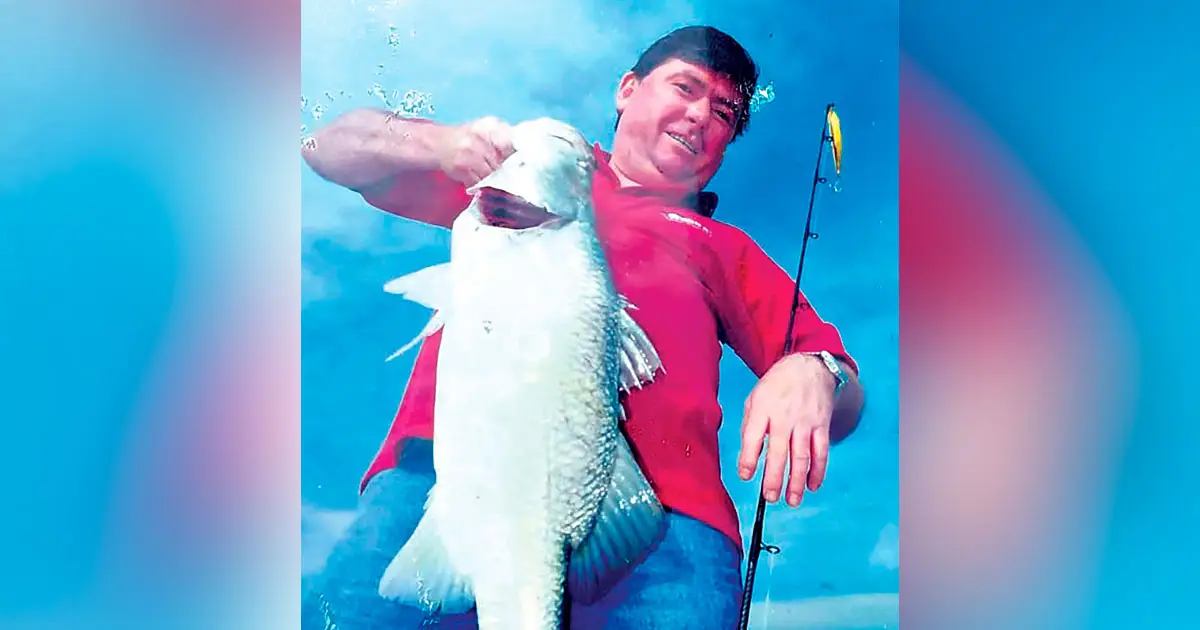

HE may work on the water most days a week, but Wade McFadgen can’t resist throwing in a line when the fish are running.
Mr McFadgen has worked an oyster farm on the southern end of Moreton Island for the past 26 years, a business that keeps him on the water most days.
His farm involves about 1.5 million Sydney rock oysters, harvested cyclically from September to March after a three-year growth cycle.
Working with them involves constant handling.

“Ours is a wild-catch farm,” he said.
“We live and farm at the same spot.
“It’s a tidal industry and when it’s a low tide, we will spend a few hours out there.”
The oysters are graded in cocktail, bottle, bistro and plate sizes.
They are native to Moreton Bay and can grow from 40mm to 70mm, but Mr McFadgen said he liked them best when they were “ripe, creamy and fat” and full of the complex flavour the oysters are known for.
“The waters of Moreton Bay are really clean, so we like the oysters to be creamy, not translucent and salty,” he said.
“But you never know what you will get.
“Every oyster looks different, just like humans.”
Originally working in the meat industry in central Java, Mr McFadgen said he took on the oyster lease from a man he knew in Java and who said it needed someone “hands on” to manage it.
“That was me, and eventually I bought it off him.”
Mr McFadgen said challenges of island life had included home-schooling his daughter, but he wouldn’t trade a life on the water.
He said life on the water allowed a first-hand view of change.
“Living on the water also involves understanding the animals here,” he said.
“We have spoonbills and turtles all around us.
“Living here is a passion.
“So, when you hear that the tailor or the mackerel are running or the squid is on the weed banks, you know when to go fishing.”
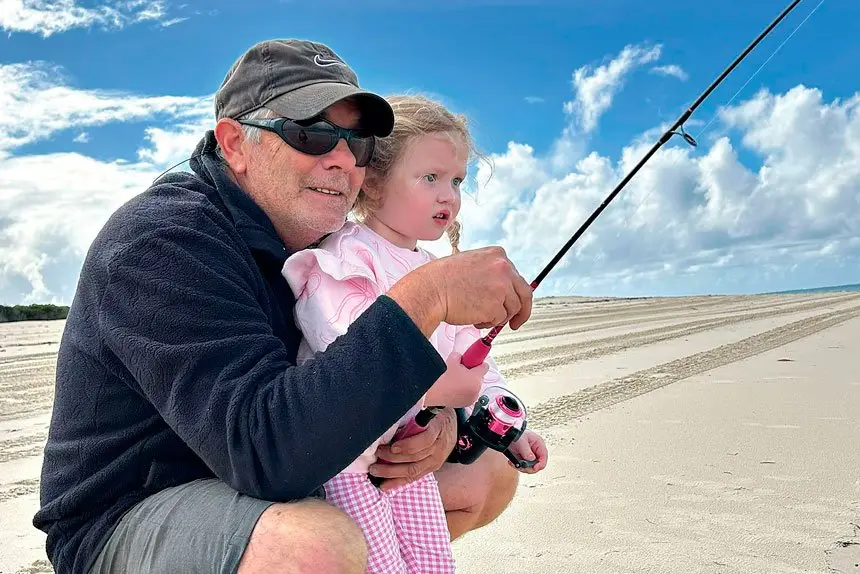
Mr McFadgen recently bought his three-year-old grand-daughter a fishing rod, and plans to pass on his passion for the pastime.