
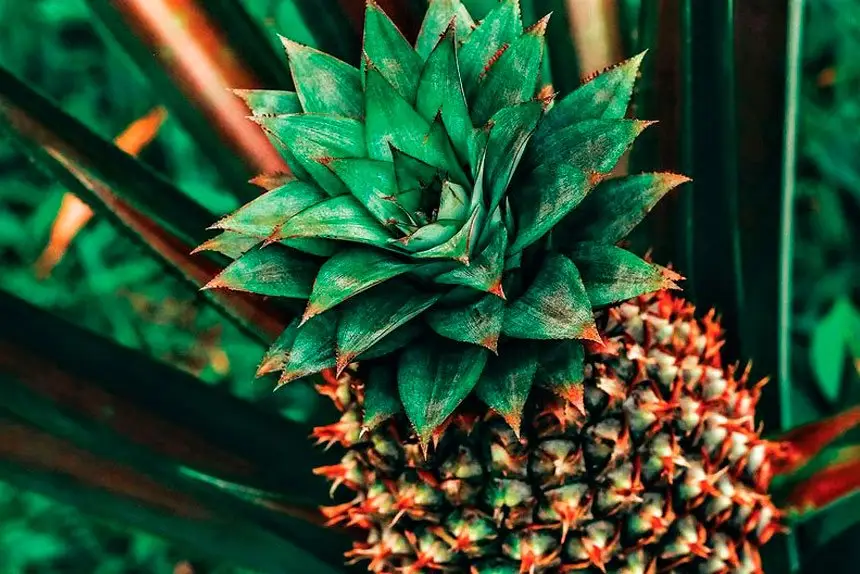
THERE are several ways to grow a pineapple. Some methods suggest peeling off the lower leaves of the stem before planting – which works just fine!
But lately, I’ve been planting pineapple tops exactly as they’re cut: flat-bottomed and placed just deep enough for the soil to cover the first three to four rows of leaves.
After about three months, they should be quite firm in the ground.
Here are a few interesting facts about growing pineapples.

People often ask: “When should they be picked?”
If you wait until they’re fully yellow, they may be overripe and starting to develop brownish marks through the flesh.
This can happen if they’re left too long before being eaten.They’re still perfectly fine to eat, but if you have one like this, try adding it heated to a meal.
Pineapples are delicious fresh, mixed with other foods, or even on bread and butter.
Try them with hot sausages or steak – they’re surprisingly tasty!
They’re best eaten cold from the fridge, and make a great dessert with custard. You can also freeze them for later or enjoy them as ice blocks. Pineapples are incredibly versatile and pair well with almost any food.
In winter, some plants may show brown or streaked leaves.
Don’t worry – they’ll bounce back in spring, especially after a good downpour.
Plants growing near a wall often do better, thanks to the sun’s radiated heat.
Although not officially documented, I believe these tend to mature earlier.
Occasionally, a pineapple will sprout multiple heads.
For double-headed pineapples, discard the top, slice down the centre with a sharp knife, clean up the lower leaves, and plant each half – either in the ground or in a container.
Some plants develop large, compact root systems, while others barely grow any roots at all.
Pineapples thrive in rich soil, so dig in a generous mix of manures: cow, horse, mushroom, poultry, or sheep.
Let it settle for a few weeks before planting, as fresh manure can be too strong for young plants.
Till next time!