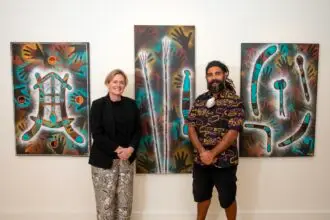

AS NAIDOC Week 2025 marks its 50th anniversary, this year’s theme – The Next Generation: Strength, Vision & Legacy – resonates deeply with Quandamooka Yoolooburrabee Aboriginal Corporation (QYAC) Chair Cameron Costello.
It’s a powerful call to honour Elders while empowering young First Nations voices shaping Australia’s future.
“For us in the First Nations community, NAIDOC Week is a time to reflect and celebrate, but it’s also about legacy,” Mr Costello said.
“We have a huge youth population – our largest demographic is our young people – and there’s a real urgency to pass down knowledge, experience, and cultural strength before we lose it with our Elders.”

Mr Costello speaks with urgency about the importance of supporting the next generation, not just as future leaders but as current ones.
“So much of our knowledge is held in our Elders,” he said.
“That’s why it’s so critical we elevate and support the next generation – to prepare them for leadership.
“That strength and support needs to be conscious and deliberate.
“This year’s NAIDOC theme recognises that: that our young people are not only the future, but they are also leaders now.”
Referencing a line from Song of Hope by celebrated poet and fellow Quandamooka woman Oodgeroo Noonuccal:
“To our father’s fathers/the pain, the sorrow; To our children’s children/the glad tomorrow” – Mr Costello reflects on how the words capture the essence of this year’s celebration.
“That really speaks to this moment,” he said.
“We want to elevate our young people, free them from the burdens of the past, and give them the space to think and lead with strength and freedom.”
For Mr Costello, the message is personal.
“Yes – my daughter especially,” he said.
“She’s 14 and is a proud, strong, young First Nations woman who’s already a fearless advocate.
“She’s done Welcome to Country at her school, and when the Voice referendum was happening, she faced racism.
“It really brings home how important it is to wrap support around young people who are putting themselves out there to lead and represent their communities.”
He says society must take collective responsibility in nurturing young Indigenous leaders.
“Leadership – especially in our space – comes with challenges,” he said.
“We have a duty, not just as First Nations people, but as a whole society – community, industry, government – to support our young leaders, especially young First Nations women.
“There’s so much strength and potential there.
“We’d be mad not to embrace it.”
Locally, NAIDOC is more than a week – it’s a month-long celebration across the Redlands and on Minjerribah (North Stradbroke Island), where community participation continues to grow.
“There are events across the Redlands and Minjerribah, including our annual celebration on the foreshore,” Mr Costello said.
“More and more people are getting involved – wanting to understand the First Nations history of this place and our stories.”
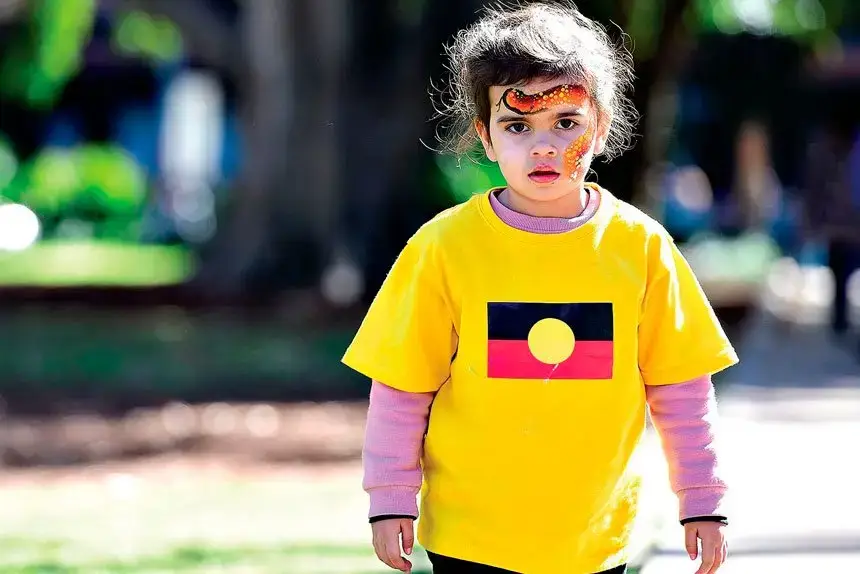
One moment that stands out to Mr Costello is seeing children of all backgrounds connect with culture.
“One of the best things I’ve seen is at the Quandamooka Festival, where our dancers perform the Crane Dance,” he said.
“Young non-Indigenous children now join in because they’ve learned it at school.
“That’s powerful. That’s unifying.”
Looking ahead, Mr Costello’s vision extends to the world stage.
As part of his PhD, he’s researching the First Nations legacy of the Brisbane 2032 Olympics – and pushing for genuine First Nations co-leadership of the Games.
“My vision is for Brisbane 2032 to be the first Olympic and Paralympic Games in history to be truly co-designed, constructed and delivered with First Nations people at every level,” he said.
“There have been games like Vancouver 2010, which had Host First Nations, and we’re learning from those precedents.
“But in 2032, the Quandamooka people will be one of the Host First Nations for Olympic venues, and we have a real chance to lead the world.”
He hopes the Games will be a turning point for global recognition of First Nations excellence.
“This is about more than participation – it’s about shaping the Games from the ground up,” he said.
“Imagine if Brisbane 2032 is remembered globally as the first Games that truly embraced First Nations culture, leadership, architecture, economic development and arts.
“By the end of those Games, I want people to say, ‘Brisbane is a global leader in First Nations excellence’.”