
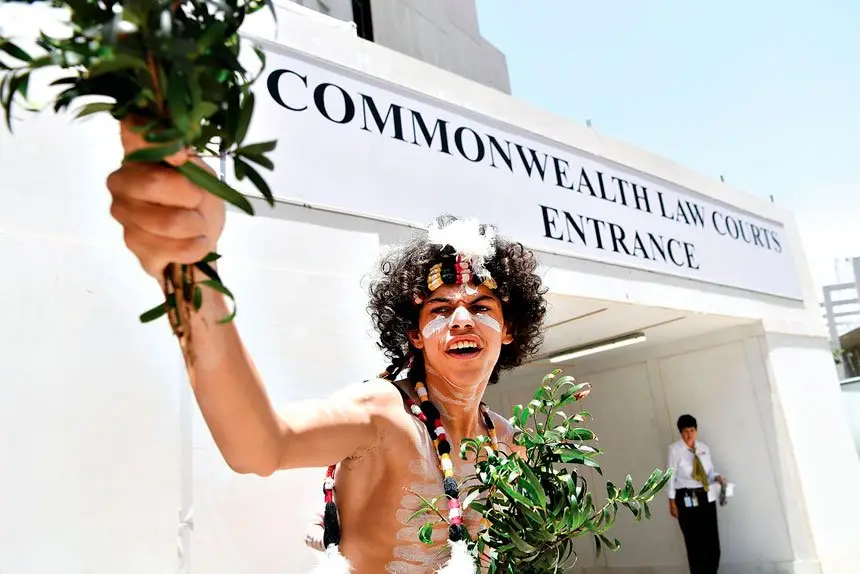
NATIVE title should be embraced as part of Australia’s journey towards reconciliation – not feared – says Quandamooka Yoolooburrabee Aboriginal Corporation Chair Cameron Costello.
Speaking on the legacy of the 1967 referendum and the landmark Mabo High Court decision, Mr Costello said native title recognition was a hard-won legal acknowledgment of continuing Aboriginal connection to country.
“The Mabo decision essentially overturned the concept of terra nullius, which translates to ‘land belonged to nobody’,” he said.
“That precedent triggered a change in Australia.

“The Native Title Act 1993 was then established to resolve the issue of terra nullius, but you must prove you’re a continuing society – that you’ve survived colonisation – and that’s what the Quandamooka people did after 16 years.”
In 2011, the Quandamooka people received their first native title consent determination.
Mr Costello explained that native title grants traditional rights such as living on and accessing country, conducting ceremony, and harvesting traditional natural resources.
These rights are managed by a prescribed body corporate, such as QYAC, under federal regulation.
Importantly, Mr Costello stressed that native title does not impact privately owned land.
“One key point is that freehold land extinguishes native title,” he said.
“So, no one loses their house.
“Native title can coexist with other tenures – like public reserves or pastoral leases – allowing traditional activities like ceremony or dance.”
He added that native title rights could re-emerge when certain leases, such as mining leases, expired.
In some cases, the High Court has ruled compensation may be owed, especially if rights were extinguished after the Racial Discrimination Act 1975 came into effect.
Compensation can take many forms, he said, including co-management of national parks and economic opportunities.
“For us, that meant joint management of the national park, better fire and water management, and taking over campground businesses – which created jobs and revenue for Quandamooka people,” he said.
Mr Costello also addressed recent concerns over a native title claim involving Redland City Council, describing them as needlessly inflamed.
“The Quandamooka Coast claim was lodged over coastal areas and waters – and it did not include private property because you can’t claim freehold land under the Native Title Act,” he said.
He clarified that a separate, broader claim – including freehold lots – was later lodged by Redland City Council, not QYAC.
“We didn’t lodge that claim and we’ve opposed including freehold lots,” he said.
“We never intended to claim over private land because we don’t want to cause unnecessary community anxiety.”
Mr Costello also questioned the financial burden being placed on residents.
“We do question why Council is doing this and costing ratepayers,” he said.
“They’ve put it in the claim – not us – and now it’s resulting in big legal bills for everybody.”
Redland City Council says it respects the Native Title interests of the Quandamooka People and is committed to progressing the matter constructively.
It believes the Quandamooka Coast claim, covering about 530 square kilometres, extends beyond coastal areas to include places like Capalaba and Venman Bushland.
With around 3500 Council-managed properties in the claim area, Council is seeking Federal Court clarity on whether Native Title has been extinguished on specific lands.
It says its actions are not intended to obstruct the claim but to provide certainty for the community, and it will continue to engage in the process in good faith ahead of a hearing in September 2025.