

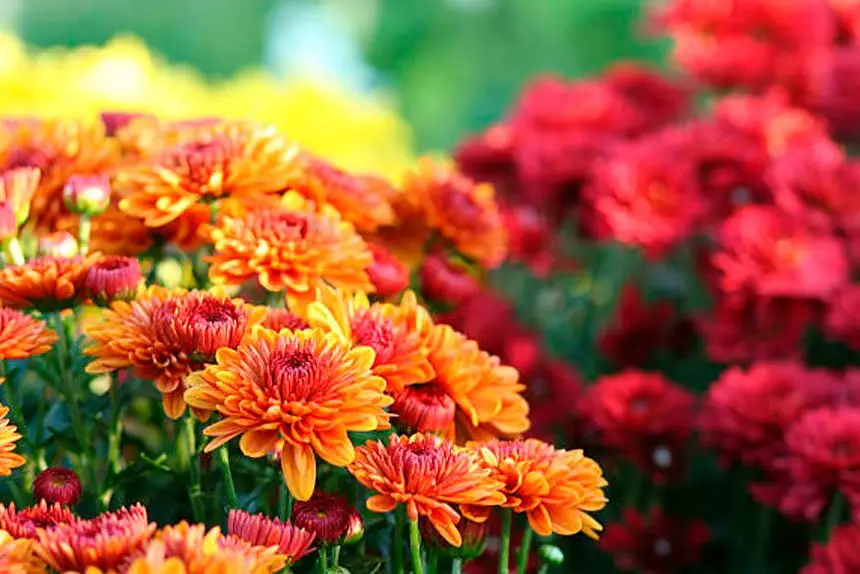
MOTHER’S Day was last Sunday, and one of the most popular flowers to give on her special day is the ever-reliable chrysanthemum.
These blooms are an extremely popular choice for any mother – known for their long-lasting flowers and wide variety of vibrant colours. Fortunately, they’re in season around Mother’s Day here in Australia.
Chrysanthemums are favoured both as cut flowers and as potted plants. When the blooms are spent, the entire plant can be placed in the garden – a lasting reminder of Mother’s Day for the year ahead and beyond.
We’re told that chrysanthemums can symbolise joy, fidelity and longevity, making them a thoughtful and meaningful gift. They come in traditional colours such as red, yellow, white and purple, typically with one flower per stem, although variations in size depend on the species.

These days, new and unusual colours are also readily available.
Chrysanthemums are one of my favourite flowering plants. They’re easy to grow and, once established, will continue to flower year after year.
They also mark the arrival of cooler mornings and shorter days. As the air turns crisp, their colourful blooms en masse can be a spectacular sight in the autumn garden.
Chrysanthemums have been around for a long time. They were first cultivated in China over 3000 years ago and were often grown for their medicinal qualities. Boiling the roots was once a common remedy for headaches.
Interestingly, depending on where you live, chrysanthemums can have very different meanings. In many European countries, they are associated with death and are often used in funerals and to decorate graves in memory of the departed.
One of the most striking varieties is the spider-type cultivar called Lava, which resembles a firework caught mid-burst.
Oil extracted from some chrysanthemum species has been used in insecticides for centuries.
If you’re considering planting your potted chrysanthemum after the flowers fade, ask your local nursery assistant to recommend the best variety for your garden.
Most shops will encourage you to buy the fully flowering plants (because they look spectacular), but selecting a plant with just a few open blooms and plenty of buds means it will continue to flower for much longer. Once the flowering ends, the plant will be ready for the garden.
When planting, make sure to gently tease the roots – don’t just plonk the whole root ball into the ground.
They’re often packed tightly in the pot and need a bit of freedom to spread and grow.
Add some fresh, good-quality soil, and you’ll be on your way to a beautiful display next year.
Till next time,