
A REDLANDS business operator has voiced his frustrations with the bureaucratic challenges small businesses face when navigating government tender processes.
With a workforce of up to 80 employees, including electricians, plumbers, builders and roofers, RTL Trades is a leading provider in commercial maintenance and fit outs.
RTL Trades General Manager Mike Smythe said the business had been hampered by the complex and time-consuming processes involved in securing government contracts.
“One of the biggest issues we face is the tender processes for Queensland Government projects,” Mr Smythe said.

“It’s very difficult to navigate the system, and you quite often end up spending a lot of hours researching, only to get 60 per cent through the process, only to find out that you’re not eligible.
“It’s a huge waste of time and resources.”
Mr Smythe said the uncertainty and costs associated with these processes were a significant burden for small businesses.
“You can end up spending a lot of time on a tender – scoping it out, submitting all your business acumen and details – and then finding out that you don’t meet some of the basic requirements,” he said.
“It’s frustrating, and it costs the business a lot.
“We may not have the right accreditation or the necessary coverage under certain government frameworks, and these things are often discovered too late in the process.”
State Member for Redlands Rebecca Young welcomes her government’s action to address the red tape that continues to hamper small businesses in her community.
With 97 per cent of businesses in the Redlands area being small family-owned enterprises, Mrs Young emphasised the crucial role these businesses play in local employment and economic growth.
“Some of the main hurdles our small businesses are facing in Redlands are things like licensing, food processing regulations, and access to tenders and grants,” she said.
“We’ve got a huge amount of small tradespeople – electricians, plumbers, builders – who all want a piece of the exciting opportunities coming up as Queensland leads into 2032.”
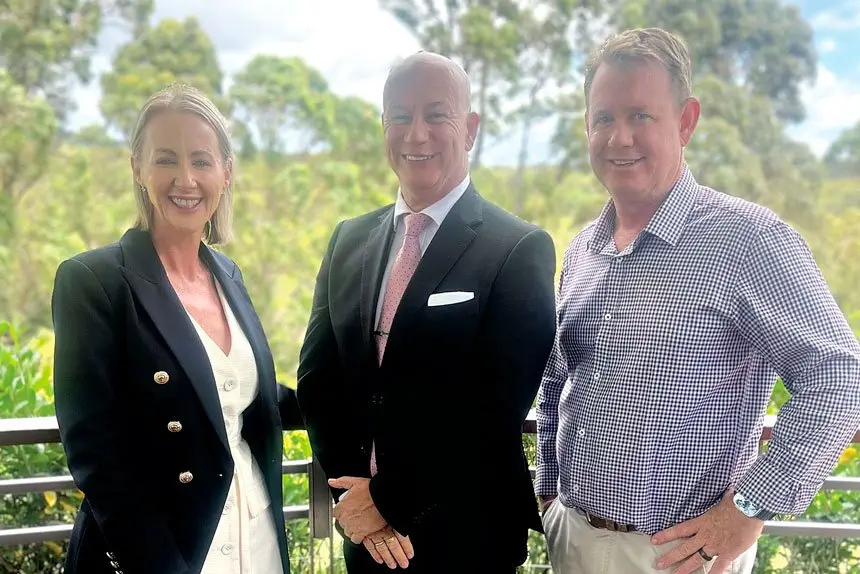
During a visit to the Redlands, Minister for Small and Family Business Steve Minnikin acknowledged the issue of redundant paperwork.
“The other thing, too, that’s coming through is that duplication of forms and paperwork,” he said.
“Whether it be an online thing, why do they have to keep telling their same primary data – things like name, address, and mobile number – every department they deal with?
“It’s frustrating, and it cuts into productivity again.”
According to research by the Business Chamber of Queensland, these inefficiencies are costing small businesses, on average, $50,000 annually in paperwork and compliance costs.
“These small businesses are the backbone of our state,” Mr Minnikin said. There are around 495,000 small businesses right now in Queensland, and they contribute about $131 billion to the economy.
“They are truly the engine room of the state’s economy.”