
MORE than half of all Australians would like their car to double as a battery that could feed power back into the grid, but big changes will be needed to make the process easier.
Early hurdles for using vehicle-to-grid (V2G) technology include the high price of bi-direction chargers, persistent software issues and a complicated installation process.
Motoring body the NRMA issued the warnings on last week in early findings from a study of V2G technology conducted with the University of Technology Sydney and iMove Co-operative Research Centre.
They come a day after the Australian Renewable Energy Agency (ARENA) issued a V2G roadmap that estimated 2.6 million households could be using the technology by 2040 to support the energy grid and save money.

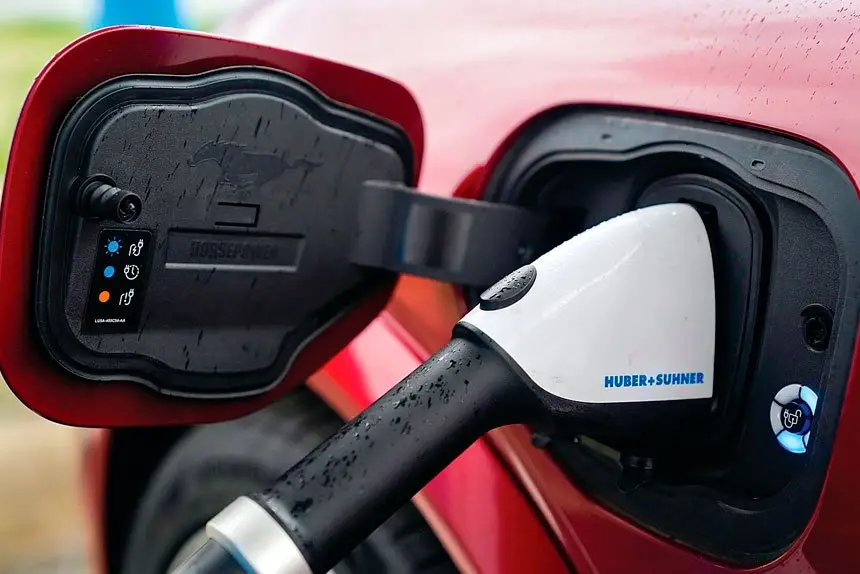
Approved for use in Australia in 2024, vehicle-to-grid technology will allow motorists to plug their electric cars into bi-directional chargers.
These chargers can be used to feed power into a vehicle’s battery or take power from it to feed into the national grid during times of high demand, potentially earning motorists money.
The NRMA-led study interviewed five early V2G adopters and found they were making about $1000 a year feeding energy into the grid from their vehicles, including one driver who made more than $500 in two hours.
The study also identified significant challenges to installing and using V2G technology, including a lack of information about the technology, compatibility and software issues with bi-directional chargers and the high cost of purchasing the equipment.
The only bi-directional charger approved for use in Australia costs $11,000.
The V2G users, based in NSW and South Australia, had to manually control the energy flowing from their vehicles – something UTS Institute of Sustainable Futures research director Dr Scott Dwyer said would be important to address to achieve wide adoption.
“The experiences of this first wave of users have allowed us to identify the main barriers and enablers of the V2G customer journey,” he said. “That will help smooth out and speed up V2G adoption for more Australians.”