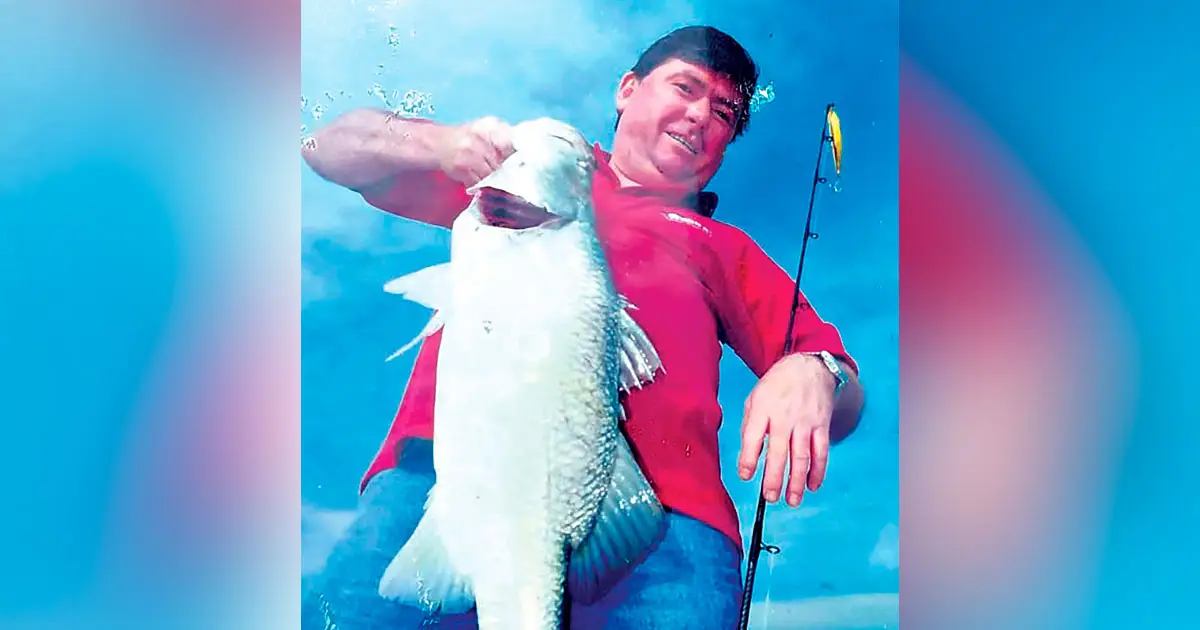

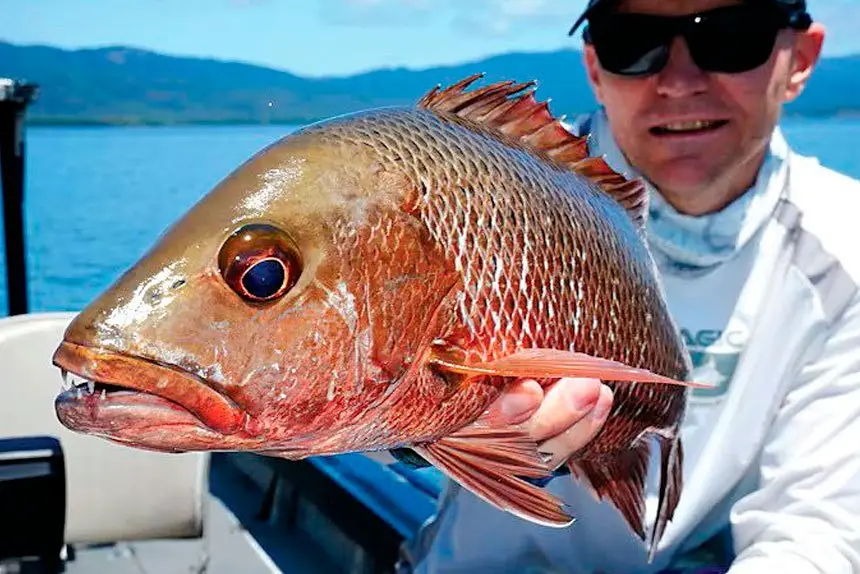
Mangrove Jack are an apex predator, with their formidable strength and elusive nature, have long fascinated and challenged fishing enthusiasts.
Mangrove Jacks, known scientifically as Lutjanus argentimaculatus, are indigenous to the tropical and subtropical waters of Australia. With their distinctively red bodies and powerful jaws filled with sharp teeth, they are apex predators, lurking in the tangled roots of mangroves and rocky outcrops, waiting to ambush unsuspecting prey. Around Moreton Bay they can be found in creeks and along mangrove shorelines, but after heavy floods, will sometimes be found in reef areas around our Bay Islands
One of the key elements to successfully hooking a Mangrove Jack lies in understanding their habitat and behavior. These cunning predators are most active during dawn and dusk, prowling the shallows in search of baitfish, prawns, and crustaceans. Anglers often target areas with submerged structures such as fallen trees, rock formations, and mangrove roots, where the jacks hide and strike with lightning speed.
“Using live bait such as mullet or prawns, and presenting it near cover, can entice even the wariest of jacks.”
Light to medium-weight spinning rods paired with braided lines and fluorocarbon leaders offer the sensitivity and strength needed to tackle these fierce fighters. Additionally, employing stealthy approaches and accurate casts are essential in outsmarting these elusive predators. They will take lures as well as soft plastics but you will need to drop these close to their ambush hideout, and get ready to pull hard once hooked so they don’t dive for cover and break your line

While the pursuit of Mangrove Jacks can be challenging, the reward is undeniably gratifying. Not only do these fish offer a thrilling battle on the line, but their firm, white flesh provides a delectable meal for anglers to savor.
As environmental awareness grows, anglers also emphasize the importance of responsible fishing practices to preserve the delicate balance of coastal ecosystems. Catch-and-release initiatives and adherence to size and bag limits are crucial in conserving Mangrove Jack populations for future generations to enjoy.