
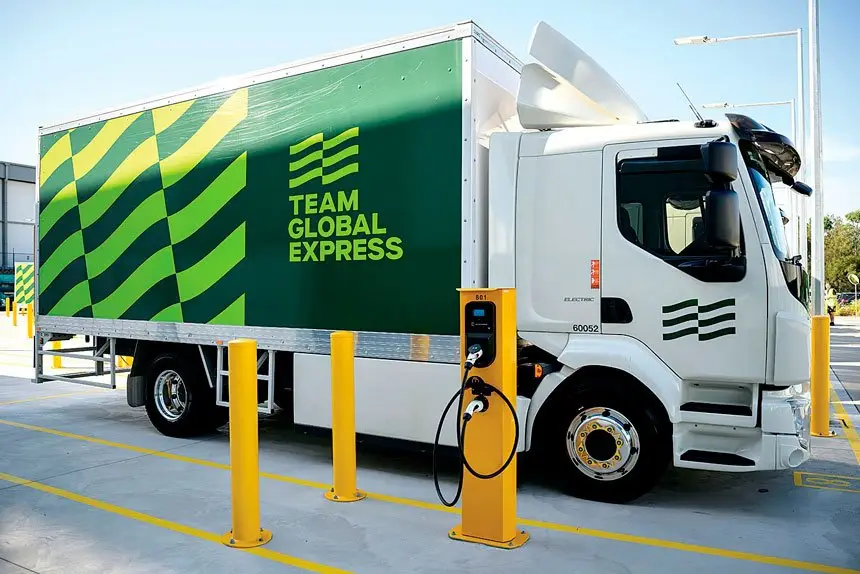
The State Government has acted on their commitment to becoming a leader in sustainable transportation.
The Government encourages the use of low and zero emission transport technologies to reduce greenhouse gas emissions and mitigate adverse impacts on the environment throughout their lifecycle.
The Government has developed an evidence-based approach for the heavy vehicle industry in the adoption of Zero Emission Heavy Vehicles.
Part of this is to undertake research into what the additional mass of these vehicles might have on our road infrastructure but at the same acknowledging that ZEHVs are an existing part of future energy transition.

An important part of the Government’s considerations has been to identify which parts of the road network could best accommodate these vehicles and facilitate access to essential supply chain linkages.
As part of a staged approach the Zero Emission Heavy Vehicle Network Map (State-Controlled Roads) is focused on selected state-controlled roads in the South-East Queensland corner of the state where industry has told us initial demand will be highest, extending from the New South Wales border at the Gold Coast to Bundaberg and as far west as Toowoomba and Warwick.
Transport and Main Roads Minister Bart Mellish said this will put Queensland on the map as a leader in future electric truck manufacturing.
“As transport is one of the main contributors to Queensland’s emissions Zero Emission Heavy Vehicles can make a significant contribution to meeting Queensland’s targets to reduce emissions by 30% below 2005 levels by 2030 and achieving net zero emissions by 2050.”
Minister Mick de Brenni, Minister for Energy, and Clean Economy Jobs said: “Without trucks, Australia stops, and so decarbonising the heavy transport sector supports emissions reduction right across the economy in everything from resources to agriculture.
Martin Merrick, President, and CEO of Volvo Group Australia:
“We now also have the green light to invest even further in Queensland manufacturing.”