
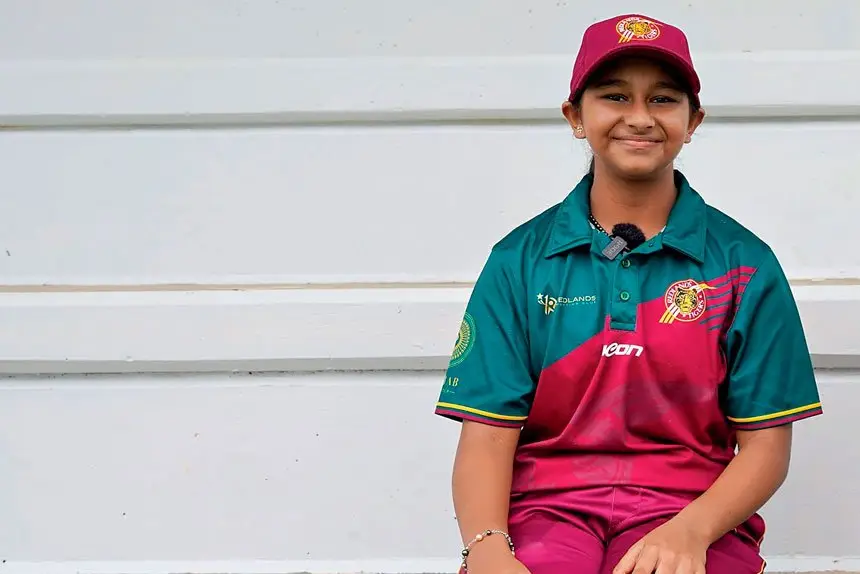
Redlands Tigers ctricket player Ruwenthika Nithyananthan is among the female cricketers who are pleased about the signing of a Memorandum of Understanding between Redland City Council, local clubs and two sporting governing bodies.
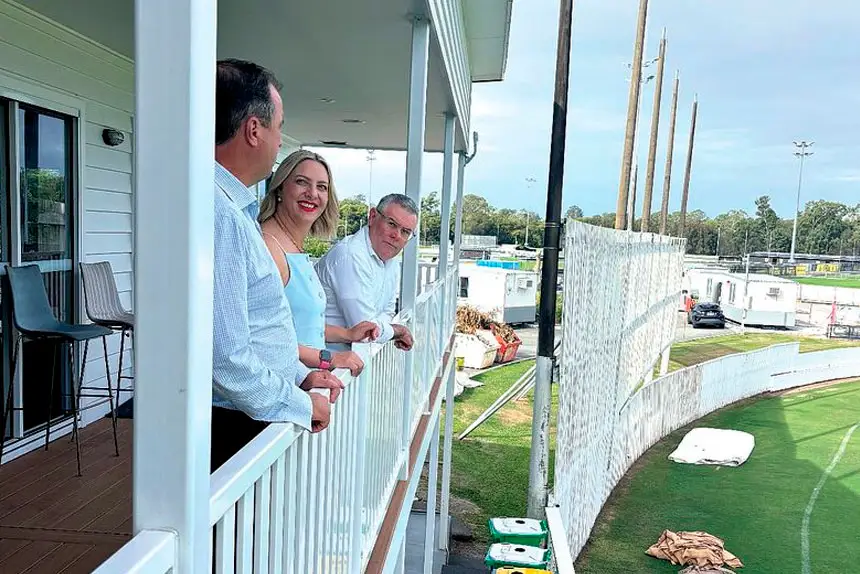
Mayor Williams said upgrades will include field lighting of Peter Burge Oval, other lighting, changing rooms extensions, an indoor turf training facility, new fencing, and a grandstand for spectators.
Miss Nithyananthan said that she likes the opportunities provided at her club and the ability to learn from more experienced players and we welcomed into a friendly collective.
“Earlier last year, in June, we went to Darwin for the Queensland team, and we had a really nice competition there,” she said.

“Before that, we went to Met East in Bundaberg and we had a nice competition there as well.
“It’s really nice because we have many more opportunities and since I’m young now I’ll be able to grow up and get more training and maybe even participate in that (upcoming international Olympics).”
Queensland-based Cricket Australia General Manager of Government Relation, Infrastructure and Community Cricket, Geoff Teys said there has been a strong growth in entry-level cricket programs.
“There has been 25 per cent growth compared to last year across Queensland, our girls’ program is up almost 50 per cent, and our fastest growing region is the Redlands region,” he said.
“We’ve seen numbers double in the last 12 months, which is very exciting.”
The MOU was signed on January 9 between Redland City Council, Redlands Cricket Club, Redlands Sporting Club, Cricket Australia and Queensland Cricket.
WOMENS CRICKET FUN FACTS
- In 1986, Lyn Larsen, 22, became the youngest captain of the Australian women’s national cricket team
- Women had few opportunities to compete in sport until the 1880s
- One of the earliest matches was played in Bendigo as early ago as 1874
- The Australian Women’s Cricket Team (Southern Stars) played their first World Cup in 1973 in England
- The Southern Stars won World Cups in 1978, 1982, 1988, 1997, 2005 and 2013
- Women filled rural men’s teams in the early 20th century to make full teams