
Councillor Shane Rendalls has urged Redland City Council to pursue regulatory reform and innovative infrastructure solutions following his attendance at the Australian On-Site Wastewater Conference in November.
Cr Rendalls delivered a presentation to council this week outlining key lessons from the three-day Australian On-Site Wastewater Conference, held from 19–21 November 2025, and their implications for the Southern Moreton Bay Islands (SMBI).
The conference brought together Australian and international experts to examine the performance, environmental impacts and design of on-site wastewater treatment systems (OSWTS), particularly in areas facing soil, drainage and land-size constraints.
Cr Rendalls said the event provided “valuable knowledge and understanding” of how different systems operate and how better testing and reporting could strengthen environmental outcomes.

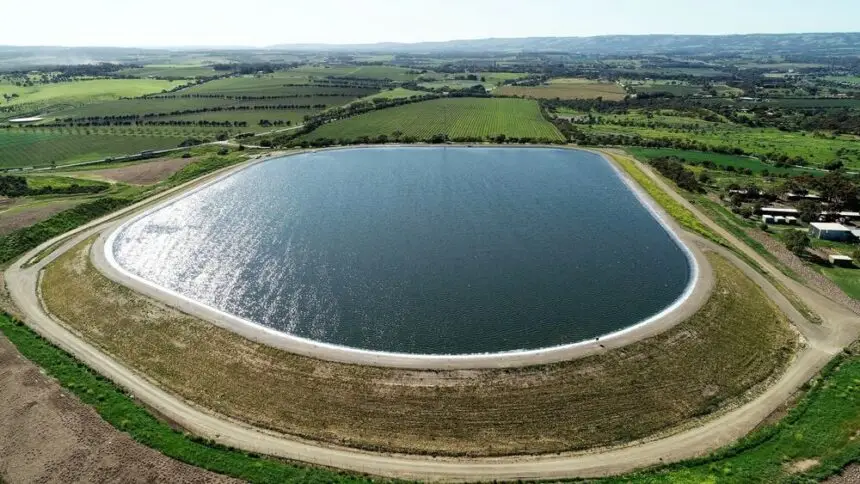
As part of the conference program, delegates undertook field visits in South Australia to inspect private-sector wastewater management systems.
These included water transfer stations, reservoirs and distribution systems where treated wastewater is sold to rural end users.
Under one model, SA Water is paid for wastewater produced, while private operators fund and manage the transport infrastructure.
Other site visits showcased innovative wastewater management in wine-producing regions, including the dispersal of water purchased from Adelaide and purpose-built OSWTS for tourism centres and wineries.
Cr Rendalls said these examples demonstrated how wastewater could be treated as a resource rather than a liability.
“Wastewater reuse in irrigation and landscape integration offers opportunities we should be actively exploring,” he told council.
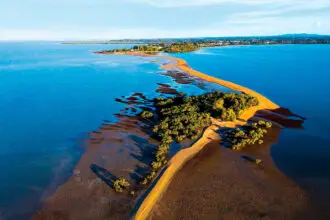
A key focus of Cr Rendalls’ presentation was the relevance of conference discussions to the Southern Moreton Bay Islands, where average lot sizes, soil types, proximity to RAMSAR-listed wetlands and drainage constraints present ongoing challenges.
He said discussions with Australian and international experts confirmed that SMBI’s issues were not unique and that proven solutions exist elsewhere.
Among the key learnings identified for SMBI were:
- Improving domestic gravity-fed systems at installation
- The use of raised evapotranspiration beds on drainage-constrained sites
- Reusing treated wastewater for irrigation
- Incorporating wastewater dispersal into landscaped designs rather than relying on standard grid systems
- Regulatory change to allow treated wastewater to cross property boundaries, council land and state land through covenants and easements
Cr Rendalls argued that regulatory reform could unlock localised, privately funded wastewater solutions in commercial precincts on the islands.
“This would allow more flexible and cost-effective responses to wastewater management, particularly in areas where traditional lot-by-lot solutions are limited,” he said.
The conference also highlighted what Cr Rendalls described as a pressing need for a more systematic approach to OSWTS testing and reporting.
He said both state government and council should take a proactive role in monitoring system performance.
A mobile device-based standardised assessment and reporting toolkit for use by local plumbers was recommended as a practical step to improve compliance and environmental outcomes.
Cr Rendalls told councillors he has made contact with several experts from the conference and is working to host site visits to the Southern Moreton Bay Islands to explore more sustainable wastewater solutions.
He strongly recommended that relevant council officers attend the next Australian On-Site Wastewater Conference to build on the momentum.
A copy of the conference program is available on request.