
AUSTRALIA Day in the Redlands and across the Bayside does not arrive with fanfare or spectacle.
It comes quietly, carried on the morning tide, in the smell of sunscreen and sausages, in the clink of boat masts and the low hum of conversation under shade tents at local parks.
Here, the day is shaped less by ceremony and more by place.
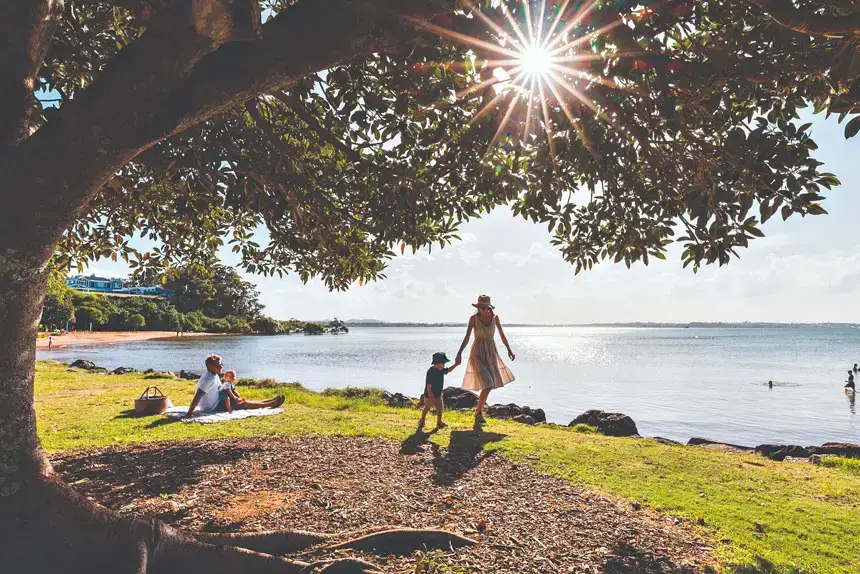
For many families, it begins early — a walk along the foreshore, kids casting lines from jetties, neighbours exchanging greetings they might only share a few times a year.

By midday, barbecues are fired up in backyards and community reserves, eskies are cracked open, and tables are pushed together to make room for whoever turns up.
It is informal, unpretentious and unmistakably local.
The coastal lifestyle defines how Australia Day is lived here.
The water is always close — whether it is Moreton Bay stretching out toward the islands, the quiet creeks that wind through mangroves, or the beaches where families return year after year.
Boats idle offshore, kayaks skim across calm bays, and swimmers wade in where the water meets the sand.
It is a reminder that this part of the world has always revolved around the sea.
But Australia Day in the Redlands and Bayside is also marked by reflection.
Increasingly, local events and gatherings begin with acknowledgement — a recognition that these lands and waters were cared for long before suburbs, boat ramps and picnic shelters existed.
Acknowledging Traditional Owners has become a natural and expected part of how the day is observed, grounding modern celebrations in a deeper understanding of place and history.
For many, that recognition sits comfortably alongside community celebration.
It does not diminish the day; it adds context to it.
It reminds us that belonging is layered, and that respect for the past strengthens how we move forward together.
Local citizenship ceremonies, community awards and small-scale events reflect this balance.
They are modest but meaningful, celebrating contribution rather than controversy.
New Australians are welcomed, volunteers are recognised, and stories are shared — not with speeches that divide, but with moments that connect.
In the Redlands and the Bayside, Australia Day is not one thing.
It is a morning swim, a shared meal, a quiet nod to history, and an afternoon spent lingering because there is nowhere else you need to be.
It is observed differently by different people, and that is part of its character here.
What binds it together is a shared sense of community — one that values respect, inclusivity and the simple privilege of living by the water.
On this stretch of coast, Australia Day is less about what we argue over, and more about how we gather.