
A long-time cat welfare advocate has made an emotional public submission to Redland City Council, urging councillors to show flexibility over local cat ownership limits to allow her to continue caring for a group of un-rehomable cats.
Lisa Roberts Daintree told councillors she was speaking in a personal capacity, but outlined decades of experience working in humane cat population management, including collaboration with councils across Australia.
Ms Roberts Daintree said she began in cat rescue many years ago but quickly realised rehoming alone could not address the scale of unowned and semi-feral cat populations.
“There simply aren’t enough good homes,” she said.

“I came to understand that there are many generations of unowned cats breeding at a rapid rate, and that a humane solution was needed.”
She described joining a successful desex-and-return program pioneered in Australia by the late Christine Pearson, rather than “reinventing the wheel”.
Through that work, she said, more than 135,000 cats had been desexed in partnership with 12 councils, stabilising urban cat populations while reducing wildlife predation.
Under the model, unowned cats are desexed and returned to the area they occupy, where their territorial behaviour helps prevent new, undesexed cats from moving in.
“This works not just because cats are desexed, but because cats are territorial,” she told the chamber.
“They hold their boundaries and keep other cats out.”
Ms Roberts Daintree said strict limits on the number of cats per household risk undermining such programs by discouraging community participation.
“People won’t help if they’re threatened with fines, seizure of cats or registration fees,” she said.
“They’ve already paid for desexing and committed to feeding these cats for life.”
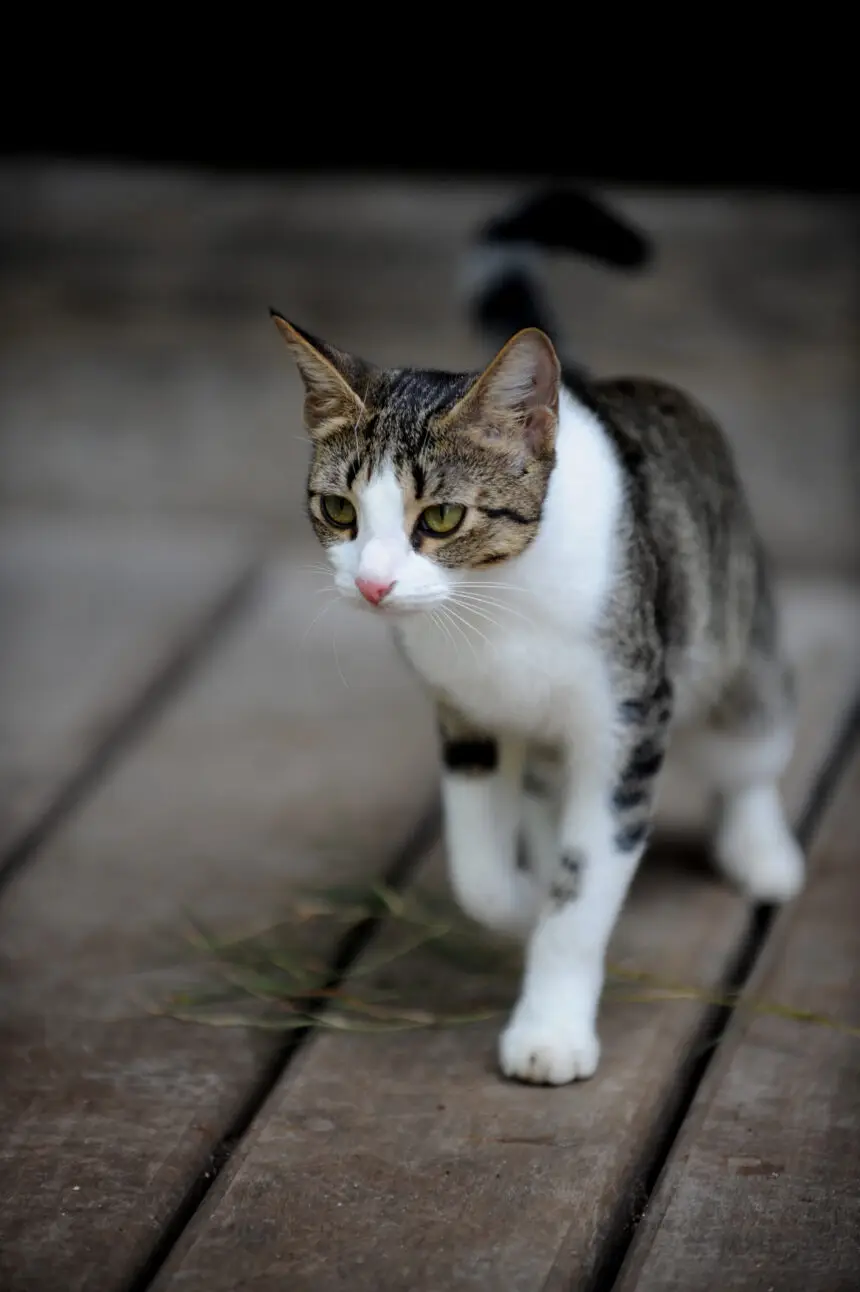
Turning to her personal situation, Ms Roberts Daintree explained she had rescued a mother cat and three kittens from an abandoned house following Cyclone Alfred.
The kittens, rescued after 10 weeks of age, had no prior human contact and were too timid to be successfully rehomed.
Despite attempts to place them, the cats were returned, leaving her caring for all four.
She said the situation was compounded by the death of Christine Pearson, who left her responsibility for the cattery in her will.
Ms Roberts Daintree told councillors she had sought council approval but was advised she could only keep a third cat if the others were rehomed before a home inspection — a condition she said was impossible to meet.
In an effort to address any potential impacts, she said all cats had been desexed at full cost of about $1,200, and her property fully enclosed with cat netting at a cost of $3,000.
“It is impossible for these cats to enter neighbouring properties,” she said.
“They cannot become a nuisance and they pose no threat to wildlife.”
Ms Roberts Daintree urged councillors to recognise her long record as a responsible cat owner and advocate.
“I am part of the solution,” she said.
“I respectfully ask for your assistance to allow me to continue caring for these cats at my home.”
Council has not yet indicated whether it will grant an exemption or review its conditions in response to the submission.