



THE installation of steel barriers at the Coochiemudlo Island ferry terminal has reignited debate among islanders, with critics questioning both the $5,500 price tag and whether the measures are having any real impact on unsafe behaviour.
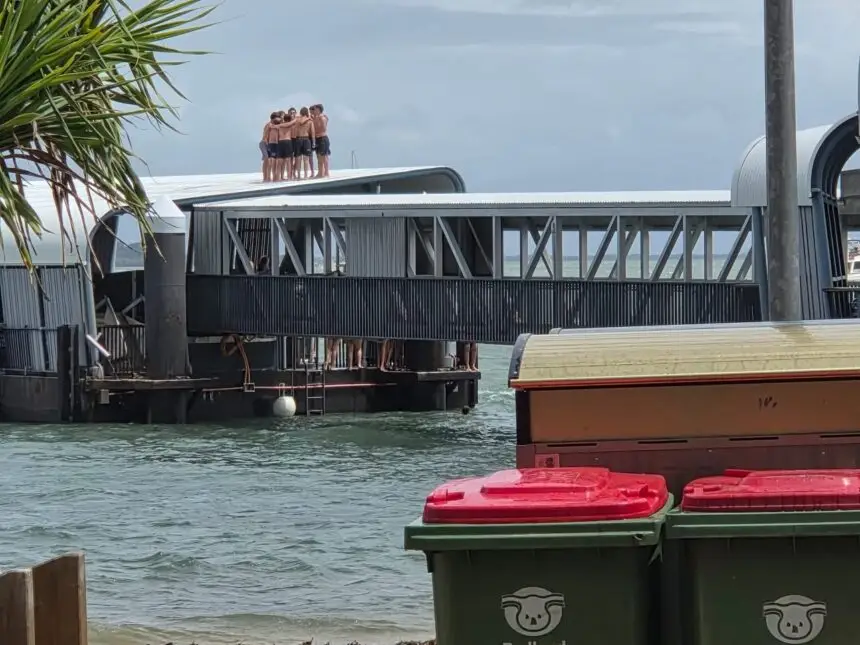
Two steel panels were installed on December 11 in an effort to stop people climbing onto the terminal roof and jumping into the water.
One panel sits above the roofline, while a second has been fixed along the gangway handrail, accompanied by warning signs prohibiting jumping, diving and unauthorised access.
A Redland City Council spokesperson confirmed the works were aimed at improving safety at the busy terminal.

However, some residents remain unconvinced.
Posting on social media this week, Doug Christie described the expenditure as “a waste of money”, saying the barriers had failed to stop loutish behaviour.
“Last Monday it was standing room only on all parts of the jetty roof,” he said.
“The actions of teenagers using the jetty as a games and entertainment area make catching the ferry for residents and visitors a bad experience.”
Long-time islander Geoff Buchus also questioned the cost, asking whether the steel came with “gold-plated bolts”.
“That certainly sounds extortionate considering the residents are probably paying for it out of their rates,” he said.
“And it probably won’t stop them.”
Councillor Lance Hewlett said the barriers formed part of ongoing efforts to reduce serious safety risks.
“Hopefully this will assist with preventing serious injury, reduce risks to ferry operators and commuters and reduce costly damage to infrastructure,” Cr Hewlett said.
Jetty jumping at Coochiemudlo has been a persistent problem for years, particularly during summer.
The risks include shallow water, strong tidal movements, ferry traffic, submerged hazards and the potential for catastrophic spinal injuries.
Opinions among residents remain divided.
Shannan Hughes said the deterrents would simply “make it more of a challenge” and argued people should take responsibility for their own actions.
“When I was jetty jumping back in the day, you made sure there was nothing underneath, watched the tides and didn’t interrupt ferries,” he said.
Others defended the spend. David Logan said the cost was justified if it prevented even one serious injury.
“It’s hardly expensive if it stops one broken neck or back,” he said.
Concerns were also raised about council liability.
Michael MacArthur said councils were often blamed and sued after accidents, driving up insurance costs.
Despite the new barriers, several residents said the behaviour was continuing.
Allan Hedges reported people were still jumping from the roof, saying the latest works “haven’t stopped them”.
Others, including Tony Forbes and Tom Schermer, said jetty jumping had been happening for generations and was unlikely to stop without alternative outlets for young people seeking risk and adventure.